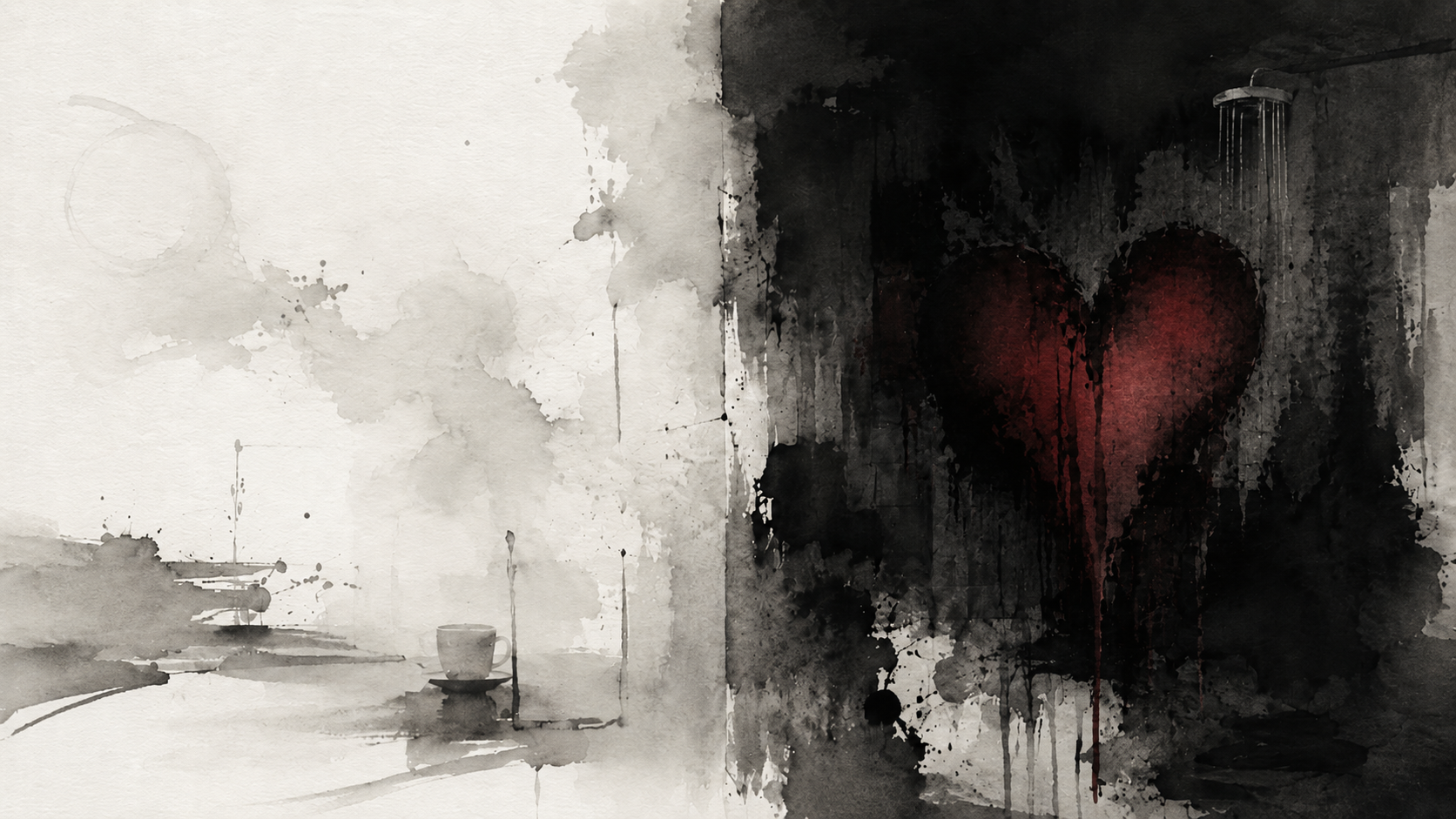
The Word Is too Small
People ask if I’m tired.
It’s a kind question. A normal question. One of those small social bridges people build when they can tell something is off but don’t want to pry too hard.
The problem is that I almost always want to answer, “Always.”
Not in a dramatic way. Not as a complaint. Not as a request for everyone to stop what they’re doing and gather around my exhaustion like it’s a small civic emergency.
Just: always.
I am tired when I wake up. I am tired after resting. I am tired after doing very little. I am tired in the middle of conversations I care about, during moments I want to be present for, inside ordinary tasks that should not require negotiation.
Still, “tired” is the wrong word. Or, maybe it is too polite a word. It sounds like staying up too late, needing coffee, wanting a nap, having a long day. It sounds recoverable in a familiar way.
What I mean is something else.
Another Kind of Pain
Ordinary tiredness has a shape I recognize. You push too hard, you sleep, you recover. Maybe you need a quiet night. Maybe you need caffeine, or a better routine, or one good uninterrupted stretch of sleep.
Severe fatigue does not work that cleanly.
I have started to think of it as another kind of pain. Not sharp pain. Not throbbing pain. Not the kind with one obvious location you can point to and say, here, this is where it hurts.
It is more like pain spread through capacity itself.
It hurts to begin. It hurts to continue. It hurts to think through the next step. It hurts to stand there knowing what needs to happen and feeling the machinery fail to answer. Not because I do not care. Not because I am unwilling. Because the part of me that turns intention into motion has been scraped down to almost nothing.
Caffeine helps a little sometimes. I’m grateful when it does. It can lift the floor an inch or two. It can make the next hour more manageable. It can help me get through a conversation, a chore, a bedtime routine, a small obligation that still matters.
It is not a cure. It does not give me my body back. It does not turn danger into confidence. I do not want to overdo it, either, because borrowing energy at interest is still borrowing.
Some nights the fatigue gets bad enough that basic things start to feel unsafe. Showering, for example. Not hiking. Not driving across the country. Not doing anything heroic or strenuous or impressive.
Showering.
There is something quietly humiliating about needing to assess whether sitting under water is a good idea. The task is simple. The risk is not. That is where the difference lives for me. Ordinary tiredness makes things unpleasant. Severe fatigue makes ordinary things feel like they require a safety plan.
The Missing Language
The hardest part is that when fatigue is at its worst, language goes with it.
That feels almost unfair. The thing I need to explain is also the thing that takes away my ability to explain it. I can usually describe pain. I can usually describe frustration. I can usually turn experience into sentences, if not gracefully, then at least eventually.
Fatigue is harder. It does not always announce itself as a sensation. Sometimes it is more like the absence of access. The door is there. The room is there. The task is there. I know what needs to happen. I may even want to do it.
Then I reach for the part of myself that does things, and nothing answers.
That is not laziness. It is not mood. It is not a failure to rally. It is not the normal human wish to be left alone for a while.
It is capacity disappearing.
What I Will not Relinquish
There are nights when almost everything has to be negotiated down.
The shower can wait. The dishes can wait. The message can wait. The thought I wanted to finish can wait. Some version of myself I had hoped to be that evening can wait.
What I will not relinquish, if I can possibly help it, is love.
Sometimes that is all I can muster. Sometimes it is the only thing left that still feels available. Not as a grand statement. Not as a cure. More like a survival mechanism at this point. A small, stubborn refusal to let fatigue take the whole room.
I will try my very hardest to sing before bed. I will try to blow kisses. I will try to say I love you. I will try to say thank you. To my kids. To my wife. To my parents. To the people who keep showing up in the middle of all this.
Some nights that may not look like much from the outside. A few words. A song half-sung. A kiss blown from a body that is barely cooperating. A thank you said because gratitude is still true, even when everything else is frayed.
Yet those gestures matter to me. They are not extra. They are not decorative. They are the thread I keep my hand on.
Because fatigue can take a lot. It can take motion. It can take language. It can take confidence. It can make an ordinary room feel too large to cross.
It does not get to take that.
Always, but not Always the Same
This is why I feel strange answering the question honestly.
“Are you tired?”
Yes.
Always.
But, also not always in the same way. There is the manageable tired, where I can still laugh and help and think. There is the background tired, which I carry so consistently it almost becomes part of the room. There is the tired that makes me slower, quieter, less available.
Then there is the tired that makes me look at the shower and think, not tonight, not safely.
That is the version I wish I had better words for. Not because everyone needs a full explanation every time they ask. Most people are being kind. Most people are just trying to check in.
I only wish the word “tired” had more rooms inside it.
One for sleepy.
One for worn out.
One for I need rest.
One for this is pain.
One for I am still here, but the machinery is down.
One for please understand that I am not exaggerating when I say the smallest thing has become too large.
Until I find better language, I may keep answering badly. I may say “always” and hope it doesn’t sound bitter. I may say “yeah, a little” when I mean something much bigger. I may say nothing at all, because the words are on the other side of the fatigue too.
Still, this is the best I can do for now.
Sometimes tired means I need sleep.
Sometimes tired means I need help.
Sometimes tired means I am standing at the edge of an ordinary task, trying to decide whether ordinary is safe.
And, sometimes tired means I have almost nothing left, except the thing I most refuse to lose.
Too fatigued
To write a haiku
But, she always lifts me up