I Paid Attention
Anna’s Part
Earlier this year, I was working on the Suno track to go with the piece about Charlotte and me singing “What Do you Know About Love” at bedtime.
In the original version, that memory was still mostly sweet. Funny, too. My Spotify Wrapped had become less a record of my taste than a record of my household. Disney songs. Animated musical numbers. Tiny fingers on my screen. A three-year-old’s voice turning my phone into evidence of the life I was actually living.
Charlotte usually sang Anna’s part. I sang Kristoff’s. That detail still gets me. It is funny because it is so specific. Because of course she took Anna’s part. Because she took it with the complete seriousness of a child who has not yet learned that joy is supposed to be proportionate.
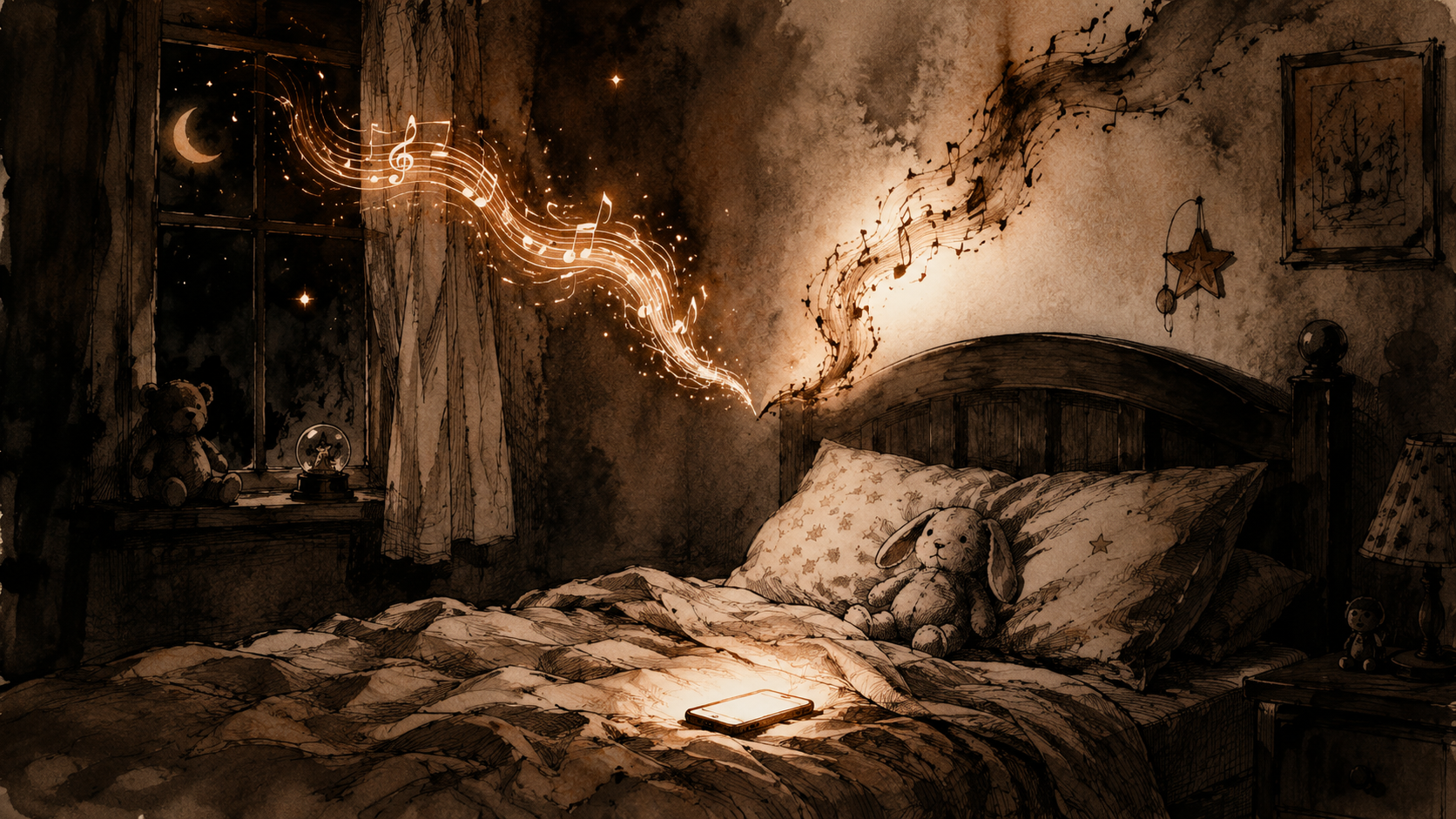
We would sing it in the loose way families do things at night. Not beautifully. Not for anyone. Half singing, half whispering, trading lines in the dark. Her little voice coming in where Anna’s should be. Mine answering where Kristoff’s should be. One more bedtime habit among many, except now it is not one more anything.
I am not getting that three-year-old back. That is true in the ordinary way it is always true. Children move forward. They leave versions of themselves everywhere and do not look back because they are busy becoming the next one. Most of the time, that is beautiful. This time it bites harder.
I probably will not sing Kristoff’s part again either. Not like that. I could try. I could force the air. I could make something that technically resembles singing. But, resemblance is not return. The voice I had then, the ease of it, the confidence that what I meant would come out close enough to what she heard—that is the part I cannot simply manufacture.
The strange mercy is that I remember paying attention.
For some reason, near the end, I had the feeling that the last time might be the last time. I did not know it the way a person knows a fact. I knew it more quietly than that. I remember listening harder. I remember noticing the shape of the room, the back-and-forth of the song, the small impossible fact of her voice beside mine.
There is no way to prove that was the last time. Maybe it was only one of the last times. Maybe memory has polished it into something cleaner than it was. Still, I know I was awake inside it. I did not drift past that particular door as it closed.
What the Voice Carries
The song is only part of it.
The broader grief is that I do not fully trust my voice anymore. Not just singing. Speaking.
MS can make speech a strange negotiation. Breath, volume, pitch, tone, the muscles of the mouth and throat, the timing between intention and sound—all of it can become less automatic than it used to be. There are names for parts of this: dysarthria, dysphonia. Clinical words have their uses. They make the problem legible. They do not make it less intimate.
The intimate part is this: sometimes when I try to speak louder, especially over other people, the tone comes out wrong. The force gathers in the wrong place. A sentence leaves me carrying an emotion I did not put into it.
A few weeks back, I said something to Charlotte. I do not even remember what it was. What I remember is the sound of it. It came out harsh. Maybe angry. Maybe mean.
I was not angry. I did not mean to sound mean. But, she is four. She does not owe me a careful distinction between neurological distortion and feeling. She heard what she heard. The words arrived in the room wearing the wrong face.
Christa tried to explain it to her, and I was grateful. I am grateful. There is love in that kind of translation. There is mercy in someone standing beside the broken instrument and saying, That is not what he meant.
Still, explanation arrives after impact. It can soften the moment, but it cannot entirely enter the first sound and change its shape. Once words leave the mouth, they belong partly to the person who heard them.
That may be the hardest part to name. Not that my voice is weaker. Not even that it is less clear. It is that my voice can misrepresent me to the people I most want to reach gently.
Love goes in. Something sharper comes out.
The Song Stayed
That is why this little Suno track has felt heavier than I expected.
At first, it was supposed to be an accompaniment. Another artifact for the essay. A way to let the memory have music around it, which seemed fitting enough. The original piece was already about music as a record of what actually happened. Not taste. Not identity. Not the version of myself I might have chosen to present. Just the evidence left behind by living.
Now the track feels like something else. Not a replacement for the duet. Not an attempt to recreate it. More like a small room built beside the room I cannot enter anymore.
The song stayed. Charlotte is still here. I am still here. The love is still here. What changed is the path between feeling and sound.
That sounds simple when I write it down. It does not feel simple. It feels like standing with a handful of intact love and not trusting the hand that carries it. It feels like remembering a duet and realizing what I miss is not only the music, not only the child at three, not only my part in the song. I miss the old faith that my voice would carry me faithfully across the small distance between us.
Still, I keep returning to the mercy of attention.
I heard her sing Anna’s part. I heard myself answer. I knew, somehow, that something was passing, and I stayed with it. Not perfectly. Not enough to save it. Attention is not preservation. It does not stop the child from growing or the body from changing or the voice from becoming unreliable.
But, it does give the moment a witness.
That is not enough to make it last. It is not enough to give me that voice back, or that three-year-old back, or that bedtime duet back. It is only enough to say the thing happened. It was real. I was there.
I was listening.
It went by
I paid attention
I was there