Markers
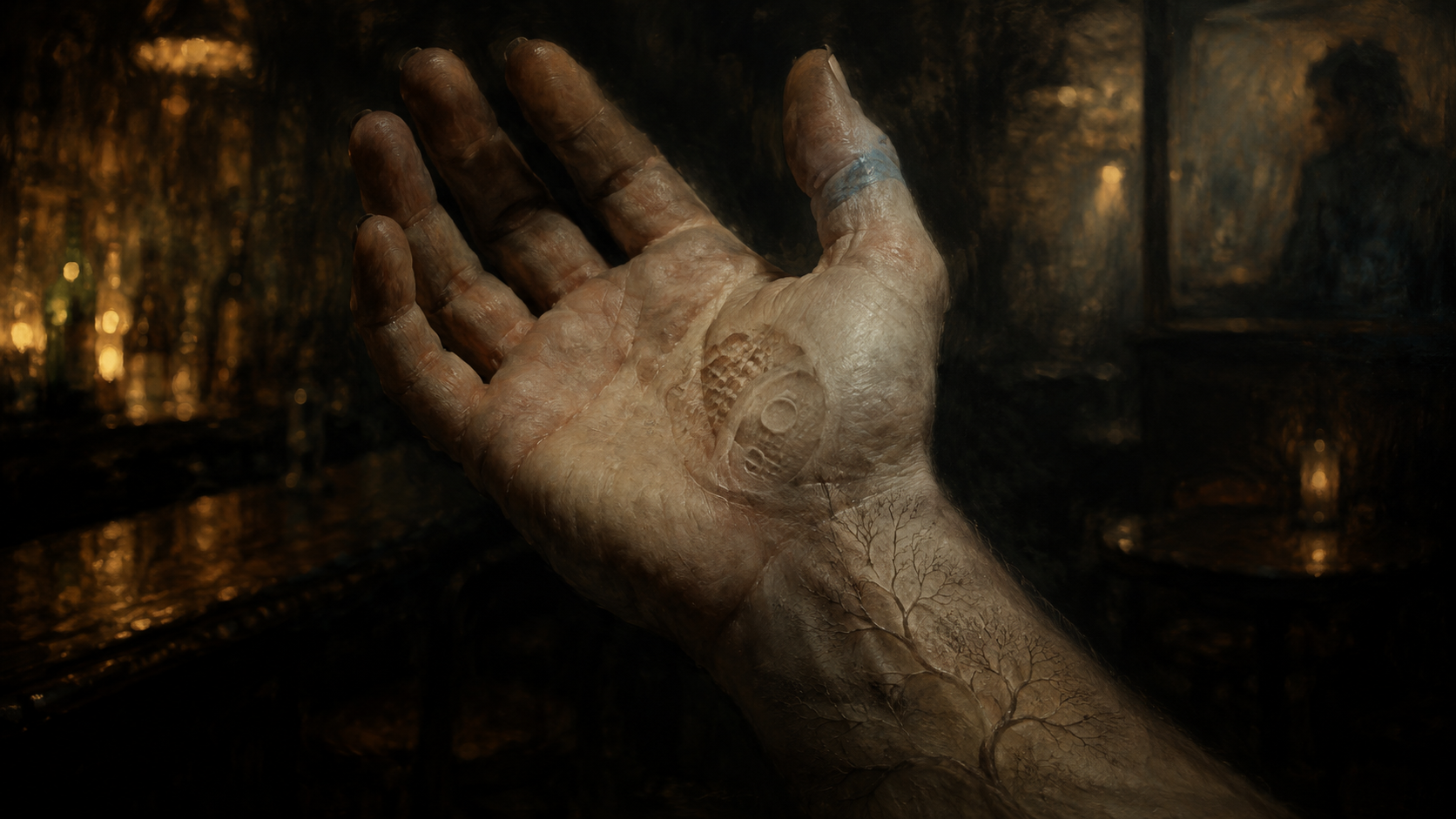
Around midnight on June 6, 2009, Austin Martone sat in the back corner of The Gateway in central St. Louis, placed a revolver in his mouth, and pulled the trigger.
The shot filled the room with the stench of rust and copper and sulfur. It plastered the wall to his right with fragments of his skull, some of which stuck and some of which fell with him. On the floor, he proceeded to emit a bizarre, mangled scream for nearly two minutes. This was the part people had the hardest time forgetting. Not the gunshot. Not the blood. The sound afterward.
Everyone inside The Gateway that night received free entry for life.
This was the owner’s idea. A gesture of goodwill, he called it, though goodwill is a strange way to describe allowing traumatized people to return indefinitely to the place where they acquired the trauma.
Still, there is a list behind the bar. Thirty-seven names. Eight people have moved away, two are dead, one was banned after punching Keith during an argument over a jukebox that does not exist, and another comes in every year on June sixth to order club soda and stand silently in the back corner.
Alexandra Martone’s name is not on the list.
Lex never pays for anything.
No one has ever told her this.
| | | | |
She is almost finished vomiting in the corner for the third time this month.
The music is loud enough that no one seems to notice, but there she is, keeled over with strings of saliva stretching from her mouth, one hand braced against the same wall where her brother’s skull fragments once stuck to the paint. It is always that corner, as if she is paying tribute. As if her heart is set on making me mop every imaginable bodily fluid from that particular piece of floor.
Anyone who saw Austin die gets free admission. Lex did not see it, but she does not seem to have anywhere else to go.
Or anywhere else she wants to be, at least.
We are supposed to be hosting some shitty local indie-rock band, but apparently there was a scheduling error, which means they forgot they agreed to play. The Wondereers. God knows why a band with a name like that even bothers showing up when they do.
They had been willing to play on short notice during a predicted snowstorm. It is hard to get anyone good in a place like this in January, even on the weekends, so now the employees are taking turns as DJ. Keith has been inflicting what he calls deep cuts on the crowd for almost an hour.
At least people are staying to drink.
“Nathan,” I see Lex mouth at me, followed by the universal sign for water.
She is thin and pale, with red hair that might come from a bottle, though in the five years I have known her I have never seen it another color. Her features are sharp without being severe, the sort of face that appears calm even when the person behind it is actively falling apart.
A redwood is tattooed up her right arm, its roots beginning near her wrist and its trunk climbing toward her shoulder. The branches disappear under the sleeve of her shirt. Now, the tree bends as she waves me over.
I pull her away from the wall before she can slide into her own mess.
“How much did you drink?”
She considers this.
“What counts as one drink?”
“One drink.”
“Then, I don’t know.”
She raises her hands to demonstrate the unknowability of the universe and nearly falls forward.
I lead her toward the back hallway, grab a glass of water from the bar, and tell her I will meet her upstairs in five minutes. She stumbles away, leaning against the wall as she goes.
Keith watches her disappear through the door leading to my loft.
“You two going out yet, or has the leech just officially moved in?”
“She’s drunk.”
“Doesn’t answer the question.”
I place an empty pint glass in the sink harder than necessary.
Keith raises both hands.
“Sensitive subject.”
“She’s Austin’s sister.”
“I’m aware.”
“You were here.”
“I am also aware of that.”
“Then, shut up.”
“Still not an answer.”
I tell him I will be back after I clean the corner. He gives a small salute and begins lowering the volume.
For years afterward, the owner refused to repaint the wall. He claimed it would be disrespectful. Really, he liked pointing out the faint discoloration to musicians and out-of-town promoters. There was history here, he would say.
Eventually, Lex painted it herself.
She came in one afternoon carrying a gallon of gray paint and a roller. No one tried to stop her. When the owner arrived and saw the fresh wall, he stood there for a while, trying to decide whether he was angry. Then he asked if she had kept the receipt.
The floor is concrete and easier to clean. I mop until the corner smells like bleach instead of vomit.
Upstairs, Lex is spread across my couch and coffee table, the redwood broken over the edge like a fallen bridge. This is not the first time. She is like a drunken cat, always appearing at random to lounge in places I cannot imagine being comfortable.
The music is quieter here, except for the bass, which throws ripples through the water she has spilled across the table. You can never quite escape the sound from below. I have tried talking to the owner about adding insulation to the ceiling, but he says it would ruin the aesthetics. He also says I am the one who chose to live above a concert venue, so my suffering does not qualify as an emergency.
The loft sounded great on paper, considering the price.
In reality, I have an echo chamber with a mattress on the floor, a kitchenette with no walls, a bathroom that appears to have been designed for a train, and, about once a week, the passed-out twenty-two-year-old who really ties the room together.
“Hey, Lex.”
No response.
“Alexandra.”
She opens one eye.
“Don’t call me that.”
“Drink some water.”
“Did.”
“You poured it on the table.”
“Table looked thirsty.”
She closes her eye again.
I slide her legs off the coffee table and onto the couch, then pull a blanket over her. I am not sure why I give her the blanket every time. In the morning, it is always kicked to her feet, like she overheats or disapproves of the extra comfort.
She used to crawl into my bed when this happened, but I could not handle waking up freezing. Lex had to be relegated to the couch. She took the decision surprisingly well, which is to say she called me an inhospitable bastard and then immediately fell asleep.
I turn away, but she catches my wrist.
Her grip is weak but deliberate.
“You ever hold one?” she asks.
“One what?”
She does not answer.
“Lex?”
Her fingers tighten slightly. Her eyes remain closed.
“Heavier than you’d think.”
She releases me and turns toward the back of the couch.
Within seconds, her breathing slows.
I stand there for a while, waiting for her to say something else.
Below us, Keith changes songs. The new bass line climbs through the floor and passes into the soles of my feet.
| | | | |
The next morning, Lex is sitting cross-legged on the end of my bed, taking bites from a piece of overdone toast and studying a Polaroid.
“Lex, what are you doing?”
She does not respond, so I sit up and realize she is getting crumbs everywhere.
“You think you could use a plate?”
“I’m saving the environment, Nathan.”
“You’re eating bread.”
“Exactly.”
I scramble out of the covers and make a semi-successful attempt to sweep away the mess. She takes another bite and replaces most of it.
Then, I recognize the photograph in her hand.
“Where did you get that?”
“Your desk.”
“Why were you going through my desk?”
“Looking for evidence of a personality.”
I reach for the photograph. She leans away.
Austin stands behind the bar wearing one of The Gateway’s black shirts. He has a bottle of beer raised toward the camera. I am next to him, eyes half closed from the flash, one arm extended as if I am trying to stop whoever took the picture.
The photograph was taken four days before he died.
“You kept this?” Lex asks.
“Apparently.”
“You look twelve.”
“Give it back.”
She studies her brother. Austin is laughing. Even frozen, there is something active in his face, as if the photograph caught him in the middle of turning toward someone.
“He hated working behind the bar,” she says.
“He didn’t work here.”
“He’s wearing the shirt.”
“He helped out sometimes.”
“He told Mom he worked here.”
“Your brother said a lot of things.”
Lex looks at me.
The joke sounded better before I heard it.
“I mean—”
“I know what you mean.”
She returns to the photograph.
Austin and I met when he was nineteen and tried to sneak into a twenty-one-and-up show using a driver’s license belonging to a forty-three-year-old man named Roger.
The license might have worked if Austin had not also attempted to convince me he was Roger’s son.
I let him inside anyway.
He became one of those people who appeared so regularly that, after a while, no one could remember when he had first arrived. He helped bands unload equipment. He carried boxes to storage. He handed out flyers on the street. He sometimes took over the door when I needed a break.
He never accepted money. Mostly, he wanted to be around people.
That changed during the last year of his life.
“You said something strange last night,” I tell her.
“Only one thing?”
“You asked whether I’d ever held one.”
She stares at the photograph.
“Held what?”
“You tell me.”
She turns the Polaroid over, though there is nothing written on the back.
“I had a dream.”
“About Austin?”
“Maybe.”
“What happened?”
“I don’t remember.”
“You remembered enough to tell me it was heavy.”
She reaches for her coffee, discovers there is no coffee, and frowns at the empty space beside her.
“Can we go get breakfast?”
“Lex.”
“Chicken and waffles. You’re buying.”
“You don’t pay for anything here.”
“Exactly. Tradition.”
She places the photograph on my pillow and walks toward the bathroom.
Before closing the door, she turns around.
“It was in my hand,” she says.
“What was?”
But, she shuts the door.
| | | | |
Outside, in the alley behind the bar, an older man is sitting against the dumpster.
I recognize him from last night. He was near the back for most of Keith’s performance, wearing the same thick gray-brown jacket he has on now. His jeans are tucked into his boots, and his wool socks are pulled up to his knees over the pant legs.
His eyes are closed. One palm is pressed against the brick beside him.
Near the mouth of the alley, a gray-haired woman sits across from a young man. Both of their heads are slumped forward. She runs a frail hand along the wall while he cringes and flexes his shoulders, twitching and making quick fists.
“Lex, you seeing this?”
She is already pulling me in the opposite direction.
“Just junkies, man. Come on.”
“I don’t think you looked.”
“I didn’t need to.”
It is not terrible outside for January. A little snow still clings to the edges of the sidewalk, and the freezing late-morning air appears to revive Lex. She marches five feet ahead, as usual, then stops at the corner.
“Nathan,” she says. “I think we’ve got one.”
She lowers her voice.
“Hurry it up.”
It is a strange thing we started doing a couple of years ago: collecting breakups. Whenever we come across a couple fighting in public, there is a standing order to act casual and eavesdrop.
Lex leans against the building and picks at one of her gloves. I pretend to search for where I parked my car.
“Five years, Michael,” a woman says. “Five years we’ve been together. Rachel, Rachel, Rachel. Who the fuck is Rachel?”
The man looks dumbfounded. His winter jacket is scuffed, the original texture flattened and rubbed away, like he spends his life leaning against walls for support.
“Baby,” he says. “Who is Michael?”
“Are you a fucking idiot? Don’t screw with me. What’s she look like? Blonde? Long legs? Some stupid bow in her hair?”
Lex leans toward me.
“This is a weird one.”
The man narrows his eyes at the woman and puts one hand behind his head.
“Jonathan,” he says. “My name is Jonathan.”
She laughs once, sharply.
“And, I’m not cheating on you. What are you talking about?”
“You’re insane. You’re in-sane. I don’t even know what kind of bullshit this is.”
“Your name is Rachel,” he shouts. “Rachel Anne Decker. Born July third, 1987.”
The woman’s face turns red.
“I’m going home. You can go to hell, or fuck off to Rachel’s, or whoever else’s.”
She turns and strides down the sidewalk.
Not ten seconds later, she slips on a patch of black ice and strikes her head against the corner of a concrete bench.
The sound is small. Much smaller than I would have expected.
A pool of blood forms quickly beneath her and trickles into the gutter, surrounding her head with a thin layer of steam.
“Jesus,” Lex says. “Christ.”
Three people are already on their phones. A woman begins crying. A father tries to pull his daughter away from the scene.
Jonathan stands motionless before rushing to the woman’s side.
I cannot help imagining how poetic it would be if he slipped on the same patch of ice. It is strange how we forget ourselves when trying to help others.
“You want to make a statement?” Lex asks.
“What?”
“The cops. When they get here.”
Sirens reflect from windows several blocks away.
“Everyone saw the same thing,” she says. “Is it bad if we leave?”
“I don’t know.”
The sirens grow louder.
The woman on the ground convulses once. Jonathan tries to place his coat beneath her head, but a man kneeling beside him says not to move her.
“Do you still have an appetite?” I ask.
“No. Not really.”
“Then, we should go back.”
“But, we probably need to eat.”
“Fine.”
We walk half a block before Lex stops.
She removes her right glove and stares at her palm.
“What is it?”
“There was something under my thumb.”
“What?”
“Cloth. Maybe.”
She rubs the base of her thumb with two fingers.
“Like a bandage,” she says. “It was damp around the edges.”
A paramedic vehicle rushes through the intersection behind us.
“What are you talking about?”
“The dream.”
She closes her fingers around an invisible object.
“The handle was wood. It was slippery, except where the bandage caught.”
“You need to stop.”
“I’m just telling you.”
“No. You need to stop.”
She opens her hand.
For a second, she looks genuinely frightened.
Then, the expression passes.
“Chicken and waffles,” she says.
| | | | |
On the night Austin died, he cut his hand opening a bottle.
We were busy, and Keith had not yet learned the trick of striking a cap against the underside of the bar. Austin offered to demonstrate, missed whatever angle he was aiming for, and shattered the neck.
A piece of glass sliced through the pad beneath his right thumb.
He bled across the counter while laughing hard enough that I thought he might pass out. I wrapped the wound in one of the blue fabric bandages from the first-aid kit and told him to stay on the customer side of the bar for the rest of the night.
When the police returned the revolver to Austin’s father, a strip of blue cloth remained stuck beneath the wooden grip.
Lex could have heard this from her family.
That is what I tell myself.
There are photographs. Reports. Conversations held in kitchens when people believe children are not listening. Details move through families whether anyone intends them to or not.
I never told her.
But, I am not the only person who knew.
| | | | |
The first time Austin mentioned the serum, I assumed he was talking about heroin.
He had been sitting alone at the bar for almost three hours, ordering soda water and drawing circles in the condensation. This was several months before his death, shortly after a girl he knew disappeared or died or left town, depending on which version he told.
Her name was Jackie.
Sometimes Austin described her as his girlfriend. Other times, he insisted they had barely known each other.
He said she had gone somewhere west of the city.
He said she had joined a group.
He said she had fallen down a staircase and broken her arm.
He said he had watched her die through someone else’s eyes.
Eventually, I stopped asking.
“You ever remember something that didn’t happen to you?” he asked.
“Every Monday.”
“I’m serious.”
“Then, no.”
He traced another circle on the bar.
“What if you could?”
“Why would I want to?”
“Because you’d know people.”
“I know people.”
“No, you know what they tell you.”
“That’s usually plenty.”
He smiled, but the smile lasted only a moment.
“It’s made from trees,” he said.
“What is?”
“The serum.”
“Is this a skin-care thing?”
“You mix it with blood.”
“Definitely skin care.”
“It carries memory.”
I looked around the bar. We were almost empty. A couple sat near the stage, speaking quietly over the music. Keith was stacking glasses beside the sink.
“You shooting this stuff?”
“I tried it.”
“With Jackie?”
He nodded.
“What does it do?”
Austin stared at his own reflection in the mirror behind the bottles.
“There isn’t an I when you’re in it,” he said. “That’s the point.”
“That sounds terrible.”
“It doesn’t feel terrible.”
“Then, why do you look like that?”
He ignored the question.
“You ever think about how lonely it is being stuck in one person?”
“No.”
“Never?”
“Not until now.”
He turned toward me.
“Everything that happens to you stays in there. Most of it, anyway. Nobody else ever knows how anything actually felt. You can describe it, but that’s not the thing itself.”
“Most people don’t want the thing itself.”
“They should.”
“Maybe people need some distance.”
“Distance is the problem.”
I poured him more soda water.
He reached into his jacket and removed a small glass vial. The liquid inside was black. Not dark purple or brown, but a flat and complete black that seemed to cling to the sides when he turned it.
“Put that away.”
“You don’t even want to see?”
“No.”
“It’s not a drug.”
“It’s in a vial, and you mix it with blood.”
“It doesn’t get you high.”
“Neither does bleach. Put it away.”
Austin slid the vial back into his pocket.
For several minutes, neither of us said anything.
“You know what Jackie told me?” he said.
“I don’t know Jackie.”
“She said all she wanted to do was remember.”
“Remember what?”
“Everything.”
“That doesn’t seem healthy.”
“No,” he said. “It doesn’t.”
| | | | |
A few weeks after the accident on Manchester, the man in wool socks returns.
He sits at the bar past closing and refuses to leave.
Keith has removed his drink and placed it beneath the counter. The man leans halfway across the bar, reaching for it.
“It takes them away,” he says. “Don’t you understand? It takes them away.”
“Look, man,” Keith says. “It is time. To. Leave.”
“All those people. All the people, and you don’t even know. You don’t know or care. You don’t care about anyone.”
I tell Keith to move aside.
The man turns toward me and places one hand on my shoulder. His other arm swings outward, nearly knocking over a stool.
“And, that woman,” he says, looking into my eyes. “She couldn’t even know what happened.”
His breath smells like old beer and something medicinal.
He begins sobbing between words.
“What are we going to do?” he asks. “What are we going to do about it, Nate?”
I push him away.
He falls backward from the stool and lands squarely on his back, the jacket muting the impact.
Keith runs around the bar to lift him.
“How do you know my name?”
The man writhes on the floor. I cannot tell whether he is laughing or crying.
“You gave me the blue bandage,” he says.
The room seems to tighten.
“What did you say?”
“You told me not to bleed on the glasses.”
Keith gets his arms beneath the man’s shoulders.
The man looks up at me.
For one moment, his expression changes. The grief leaves his face, replaced by amusement.
Austin used to look at people that way when he had successfully convinced them of something untrue.
“You always hated the Wondereers,” the man says.
I grab the front of his jacket.
“Who are you?”
Keith pulls us apart.
“Come on,” he says. “Let’s get him outside.”
The man laughs as Keith drags him toward the door.
“Still a terrible name,” he shouts. “Fucking terrible.”
The door closes.
The Gateway is suddenly quiet enough that I hear the low electrical hum of a speaker across the room.
“You okay?” Keith asks.
“No.”
“Just a drunk.”
“He knew about the band.”
“Everyone knew about the band. We advertised the show.”
“The blue bandage.”
Keith shrugs, but too slowly.
“You told people,” I say.
“No.”
“You must have.”
“I don’t talk about that night.”
“Someone did.”
“Probably.”
“You remember the serum?”
Keith looks toward the door.
“What serum?”
“Austin used to carry a black vial.”
“Sounds like Austin.”
“You ever see him with that man?”
“I saw Austin with everyone. That was kind of his thing.”
Keith retrieves the man’s abandoned glass from beneath the counter.
“He knew my name,” I say.
“You wear a name tag sometimes.”
“I’m not wearing one now.”
“He probably heard Lex say it.”
“Lex isn’t here.”
“Then, he heard me.”
“You didn’t call me Nate.”
Keith pours the remaining drink into the sink.
“Maybe you told him.”
“I’ve never spoken to him.”
“How would you know?”
The question irritates me more than it should.
“I would remember.”
Keith turns off the light behind the bar.
“Yeah,” he says. “Probably.”
| | | | |
I find the first mark on Lex’s arm two nights later.
She arrives just before closing, sober enough to walk in a straight line. She sits at the bar and asks for whiskey.
I pour soda water.
“What the hell is this?”
“You’ve been cut off.”
“I haven’t even started.”
“Preemptive.”
She lifts the glass and smells it.
“Not even lime?”
“We’re rationing.”
She takes a drink.
Her sleeve pulls back, revealing a bruise near the inside of her elbow. At its center is a small puncture.
“What happened to your arm?”
She lowers the sleeve.
“Nothing.”
“That’s not nothing.”
“Had blood drawn.”
“For what?”
“Medical reasons.”
“What medical reasons?”
“The private kind.”
“Lex.”
“Jesus, Nathan.”
She slides from the stool.
“I came here for a drink, not an interrogation.”
“You’re not getting a drink.”
“Then, I guess I’m leaving.”
She starts toward the exit.
I follow.
“Did you find that man?”
She stops.
People are clearing the room around us. Keith carries a tub of glasses toward the back without looking in our direction.
“What man?” she asks.
“The one from the alley.”
“No.”
“The one who knew Austin.”
Her shoulders drop slightly.
It is enough.
“Where did you go?”
“Nowhere.”
“What did you take?”
“Nothing.”
“Let me see your arm.”
“Fuck off.”
She pushes through the exit.
Outside, snow has begun to fall. The flakes disappear as soon as they touch the pavement.
I follow her into the alley.
“Lex.”
She walks faster.
“Alexandra.”
She turns.
“Do not call me that.”
“Then, stop acting like a child.”
“Maybe stop acting like my father.”
“Your father knows where you’ve been?”
“My father doesn’t know where I’ve been since 2009.”
“What did you take?”
Her breath clouds between us.
“Why do you care?”
“Because you show up at my place barely conscious three nights a week.”
“Thought I was a leech.”
“You heard that?”
“Everyone hears Keith.”
“Answer me.”
She looks past me toward The Gateway.
The man in wool socks stands at the far end of the alley.
I cannot make out his face, but I recognize the shape of his jacket.
Lex sees him too.
“He knew Austin,” she says.
“So did I.”
“Not like this.”
“What does that mean?”
She rubs the puncture beneath her sleeve.
“He remembered him.”
The man begins walking away.
I move toward him, but Lex catches my arm.
“Leave him alone.”
“He thinks he is Austin.”
“No. He knows he isn’t.”
“Does he?”
“He knows better than we do.”
“What did you put in your arm?”
Her eyes move from mine.
“The serum.”
The word leaves her mouth quietly.
For a few seconds, there is only the sound of a truck passing on Manchester.
“You’re lying.”
“I’m not.”
“The thing Austin used?”
“Yes.”
“Why?”
She laughs once, but there is no humor in it.
“Take a guess.”
“To remember him?”
“To know him.”
“You knew him.”
“I was his little sister.”
“You grew up together.”
“That’s not the same.”
“It’s more than most people get.”
“It wasn’t enough.”
The man reaches the street and disappears around the corner.
I look at the puncture in her arm.
“How many times?”
She says nothing.
“How many?”
“Three.”
“Jesus Christ.”
“The first two didn’t do much.”
“And, the third?”
She closes her right hand.
“The gun.”
| | | | |
Lex was seventeen when Austin died.
She was living with their parents in Georgia and had not seen him in almost a year.
They spoke on the phone. They sent messages. Sometimes he mailed her books he thought she should read, most of which she never opened. Austin was five years older and had spent much of her childhood occupying the uncertain territory between older brother and temporary parent.
He taught her how to ride a bicycle.
He broke her wrist by convincing her to jump from the roof of a garden shed.
He took the blame when she stole a bottle of vodka from their mother.
He once locked her in a closet for forty minutes because she said his new haircut made him look like an injured bird.
Families remember people in pieces.
Lex remembers Austin holding the back of her bicycle seat.
Their mother remembers him refusing to eat peas.
Their father remembers a summer when Austin insisted on digging a pond behind the house and abandoned the project after creating a mosquito-filled trench.
I remember him trying to get into a concert with Roger’s license.
None of these is the whole person. Put together, they still would not be the whole person.
This does not make the pieces untrue.
It only makes them markers.
| | | | |
The man rents a room above a closed furniture store three blocks from The Gateway.
Lex takes me there the following afternoon.
The storefront windows have been covered from inside with newspaper. A narrow door in the alley leads immediately to a staircase. The steps are steep and the walls close enough that I can touch both sides without extending my arms.
At the top, Lex knocks three times.
There is movement inside, but no one answers.
She knocks again.
“Open the door.”
The lock turns.
The man in wool socks looks at me and sighs.
“I said not to bring him.”
“You said a lot of things,” Lex replies.
His room is almost empty. A mattress rests beneath one window. Three wooden chairs surround a metal table. The radiator is covered with jars of honey, each a slightly different shade.
Photographs have been taped to the walls.
Most are ordinary snapshots: children at birthday parties, couples standing in front of unfamiliar houses, a soldier beside an armored vehicle, a woman holding an infant. Several have faded until their subjects are barely visible.
On the table is a glass jar filled with black liquid.
I stop in the doorway.
“You need to get rid of that.”
The man closes the door behind us.
“Should have told Austin that.”
“I did.”
“Not well enough.”
Lex moves between us.
“His name is Nathan.”
“I know his name.”
“Stop doing that,” I say.
“Doing what?”
“Pretending you know me.”
He sits at the table.
“I don’t know you.”
“You remembered the band. The band Austin hated.”
“I remember him hating it.”
“You remembered the bandage.”
“Yes.”
“You said I gave it to you.”
He studies his hands.
“Sometimes the grammar becomes difficult.”
“What does that mean?”
“It means I remember standing behind the bar with blood running over my thumb. I remember you wrapping it. I remember thinking you had no idea what you were doing.”
I look at Lex.
She remains near the wall, beneath a photograph of a young girl standing beside a redwood.
“What is this stuff?” I ask.
The man lifts the jar.
“Something that should have stayed in trees.”
“That doesn’t answer the question.”
“It is sap, mostly. Resin. A few things I don’t know. A few things I wish I didn’t.”
“You mix it with blood.”
“It mixes itself.”
“What did you do to Lex?”
“I showed her what she asked to see.”
“You injected her with Austin’s blood?”
The man laughs.
“Austin’s blood is long gone.”
“Then, how does she remember him?”
He places the jar on the table.
“Because I do.”
I wait for more.
None comes.
“That isn’t an explanation.”
“It is the only one I have.”
“You shared with Austin?”
“Several times.”
“When?”
“Before he died.”
“After Jackie?”
The man looks toward Lex.
“Did she tell you that name?”
“Austin did.”
“Then, you know enough.”
“No, I don’t.”
“No one ever does.”
I take a step toward the table.
The black liquid shifts inside the jar, though nothing has touched it.
“You put Austin’s memories inside her.”
“I shared what I had.”
“Why?”
“Because she asked.”
“She’s twenty-two.”
“So was Austin.”
“And, look how that turned out.”
The man’s expression hardens.
“You think the gun was the serum?”
“I think it didn’t help.”
“Maybe not.”
“Then, why keep using it?”
He looks around the room at the photographs.
“Because there are people I can only see there.”
“You mean dead people.”
“Some.”
The radiator begins to knock.
Lex crosses her arms.
“Tell him about the marks,” she says.
The man glances at her.
“What marks?”
“He needs to know.”
“No, he doesn’t.”
“I’m standing here,” I say.
The man picks at a crack in the table.
“Memories do not transfer cleanly.”
“No shit.”
“They arrive mixed with other things. Emotion. Sensation. Habit. Sometimes you know who they belong to. Sometimes you only know they aren’t yours.”
“And, sometimes you think you’re someone else?”
“If you are careless.”
“You seem careless.”
He smiles.
“Austin was careless.”
Lex flinches.
The man notices.
“He wanted to find the girl,” he says.
“Jackie,” I reply.
“He believed enough blood would lead him back to her. That if she had shared with enough people, parts of her would remain in circulation.”
“Did they?”
“I don’t know.”
“You have Austin’s memories.”
“Some.”
“Then, where did they come from?”
“From him. From others who knew him. From people who shared with those people. A memory leaves marks. Every time it passes, something changes, but something stays.”
“That is not memory.”
“What would you call it?”
“A story.”
He nods.
“Maybe that is all memory ever was.”
I move toward the jar.
He places his hand over it.
“What are you doing?”
“Taking it.”
“It isn’t yours.”
“It isn’t yours either.”
He tightens his grip.
Lex steps between us again.
“Nathan.”
“This is what killed him.”
“You don’t know that.”
“Neither do you.”
“I’m trying to.”
“And, you think crawling inside the head of every drunk Austin used this with is going to tell you?”
Her face reddens.
“At least I’m doing something.”
“You’re poisoning yourself.”
“You drink every night.”
“I work in a bar.”
“Great excuse.”
“Not three nights a week until I pass out.”
“Maybe I’d drink less if you ever made me pay.”
The room falls quiet.
I look at the man.
“What does that mean?”
He shrugs.
Lex stares at the floor.
“You don’t charge me,” she says.
“You’re on the list.”
“I wasn’t there.”
“It doesn’t matter.”
“I don’t pay for drinks either.”
“You get a discount.”
“I’ve never paid for anything in five years.”
“You’re bad at keeping track.”
“Nathan.”
“What?”
“I know.”
Her anger has faded.
For reasons I cannot explain, this feels worse.
“I didn’t want you to know.”
“Why?”
“I don’t know.”
“Because you thought I’d stop coming?”
“No.”
“Because you’d feel sorry for me?”
“No.”
“Then, why?”
I look around the room.
Austin watches from nowhere.
“Because it wasn’t supposed to be a thing.”
Lex wipes at one eye with the heel of her palm.
“Everything is a thing,” she says.
| | | | |
Jacob lives in an apartment near Tower Grove.
I find his address in an old notebook Austin left behind the bar. The notebook contains phone numbers, set lists for bands that never played, a recipe for something called prison sangria, and several pages of sketches depicting trees with human figures inside their trunks.
Jacob opens the door but keeps the chain latched.
He is in his late twenties now, broad in the shoulders and slightly swollen around the eyes. He looks past me toward the street before asking what I want.
“My name is Nathan.”
“Congratulations.”
“I knew Austin Martone.”
The chain remains in place.
“I’m sorry.”
“You knew him too.”
“I knew a lot of people.”
“You knew Jackie.”
His eyes shift back to me.
“Who are you?”
“I manage The Gateway.”
After a moment, he closes the door.
The chain slides free, and he opens it again.
His apartment is clean to the point of unease. Nothing sits on the kitchen counters. There are no photographs on the walls. A single oak tree grows in a square of soil outside the living-room window, its branches pruned away from the building.
Jacob does not offer me a seat, but I take one.
“What happened to Austin?” I ask.
“He killed himself.”
“I know that.”
“Then, what are you asking?”
“Was it the serum?”
Jacob remains standing.
“No.”
The answer comes too quickly.
“You’re sure?”
“No.”
He walks into the kitchen and fills a glass with water.
“I hadn’t seen him in months,” he says. “Not really.”
“You were friends.”
“We used to be.”
“Did you share with him?”
Jacob drinks half the glass.
“Once.”
“With Jackie?”
“And, someone else.”
“Who?”
“Doesn’t matter.”
“Did Austin share with the man who runs the room above the furniture store?”
Jacob looks at me.
“Probably.”
“He remembers things Austin knew.”
“That happens.”
“You say that like it’s normal.”
“It was normal for us.”
“He shared those memories with Austin’s sister.”
“Jesus.”
“She feels the revolver in her hand.”
Jacob places his glass on the counter.
“Get her away from it.”
“How?”
“I don’t know.”
“You used this stuff.”
“A few times.”
“Then, tell me how it works.”
“You think I know?”
“You know more than I do.”
“That doesn’t mean I know anything.”
He sits across from me.
“The first time, there were four of us,” he says. “We mixed our blood in one syringe with the serum. You close your eyes, and you remember. Except it isn’t like watching a movie. You are there. Every feeling comes with it.”
“Whose memories?”
“All of ours.”
“Did they stay afterward?”
“Bits.”
“What kind of bits?”
“Images. Sounds. Things you can dismiss.”
“And, if you keep doing it?”
Jacob looks toward the tree outside.
“It gets harder to dismiss.”
“Could Lex have Austin’s memories because that man shared with him?”
“Maybe.”
“Even after five years?”
“Maybe.”
“Could the man have memories Austin got from Jackie?”
“Maybe.”
“You say that a lot.”
“You want me to pretend there were rules?”
“What was in it?”
“Tree resin. Chemicals. Something biological. Ramsay knew more.”
“Who is Ramsay?”
“Someone I don’t talk to.”
“Did Austin use it because of Jackie?”
Jacob nods.
“He felt responsible for what happened to her. He thought she was still out there somewhere, inside the people from the group.”
“Was she?”
“I don’t know.”
“Did he find her?”
“I don’t know.”
“What happened to Jackie?”
“I don’t know.”
He stands and walks toward the door.
The interview is over.
“What should I do with Lex?”
“Keep her from sharing again.”
“She won’t listen to me.”
“Then, let her go.”
“You think I should abandon her?”
“I think trying to hold on to people is how this starts.”
“That sounds convenient.”
He opens the door.
I remain seated.
“Did Austin ever talk about killing himself?”
“No.”
“Was he unhappy?”
“Everyone is unhappy.”
“Not like that.”
Jacob grips the door.
“Austin wasn’t empty,” he says. “He was crowded.”
I stand.
“What does that mean?”
“It means he had too many lives in him.”
“Did he say that?”
“No.”
“Then, how do you know?”
Jacob looks at me for a long time.
“I remember it.”
| | | | |
I begin keeping a list.
The first page is titled LEX.
She hates mustard.
She sleeps on her stomach.
She drinks whiskey but prefers gin.
She has never been west of Denver.
She broke her left wrist at age ten.
Her first car was a green Honda Civic.
She attended two different high schools.
She claims not to like children but always waves when one looks at her.
She got the redwood tattoo at nineteen, six months after moving to St. Louis.
She calls me Nathan when sober and Nate when drunk.
She pretends not to know that she drinks for free.
The second page is titled AUSTIN.
He put mustard on everything.
He slept curled on his side.
He drank soda water because alcohol made him sick.
He drove to California when he was twenty.
He broke his right ankle falling from a tree.
His first car was a white Ford Escort.
He dropped out of college after one semester.
He liked children until they began speaking.
He had no tattoos.
He called me Nathan because he said Nate sounded like the name of a child who started fires.
He never paid for drinks because he never ordered any.
The lists are stupid.
They are also reassuring.
These facts are small enough to hold.
They do not explain either person. They only tell me where one ends and the other begins.
At least, they are supposed to.
| | | | |
Lex stays away for nine days.
On the tenth, I find her sitting on the stairs outside my loft.
She is sober. Her red hair has been pulled into a knot, exposing the dark branches tattooed across her shoulder.
“You’re blocking a fire exit,” I say.
“There isn’t a fire.”
“Yet.”
She stands.
“Can I come up?”
“You usually do.”
Inside, she walks directly to the couch but does not sit. She studies the room as though she has never seen it.
“What?”
“Nothing.”
“You’re doing the thing.”
“What thing?”
“The ominous silence thing.”
She turns toward my desk.
“You made lists.”
I follow her gaze.
The notebook is closed.
“You went through my desk again?”
“I saw it last time.”
“It wasn’t there last time.”
“I know.”
She touches her forehead.
“I remember seeing it.”
“When?”
“I don’t know.”
I take the notebook from the desk.
“Have you shared again?”
“No.”
“Are you lying?”
“No.”
“Then, how do you remember this?”
“I don’t know.”
I open to the first page.
“Tell me something.”
“What?”
“First car.”
“A green Civic.”
“High schools?”
“Two.”
“Wrist?”
“Left.”
She sighs.
“I’m not senile.”
“Where did you get the tattoo?”
“Here.”
“I mean what shop?”
“Red Letter.”
“Why a redwood?”
“Because I wanted a tree.”
“Why?”
“I don’t know. They’re big.”
“Austin have any tattoos?”
“No.”
“Favorite drink?”
“Whiskey.”
“You prefer gin.”
“I’m aware.”
“Mustard?”
“Disgusting.”
“Good.”
“Are you going to ask my mother’s maiden name next?”
“Maybe.”
She grabs the notebook and reads the page about Austin.
Her expression changes.
“What?”
She points to the line about his ankle.
“That wasn’t Austin.”
“Yes, it was.”
“I broke my ankle falling from the maple.”
“You broke your wrist jumping from the shed.”
“No.”
“Lex.”
“I remember the cast. It was summer, and my leg itched so badly Mom gave me a knitting needle to slide inside it.”
“That was Austin.”
“No.”
“He told me that story.”
“He was talking about me.”
“You were ten when you broke your wrist.”
“I was twelve.”
“You told me ten.”
“I was ten when I fell from the shed.”
“And, broke your wrist.”
“No. I didn’t break anything.”
I turn to another page.
“You never went to California.”
“Yes, I did.”
“When?”
“After high school.”
“You moved to St. Louis after high school.”
“Before that.”
“You lived in Georgia.”
“We drove.”
“With who?”
She begins answering, then stops.
“I don’t know.”
“You didn’t go.”
“I remember the ocean.”
“You have seen an ocean.”
“Not like this.”
She closes her eyes.
“There were rocks everywhere. Black rocks. The water kept striking them, and there was foam blowing across the highway.”
“You’ve seen pictures.”
“I remember being cold.”
“It was Austin.”
She opens her eyes.
“Maybe.”
“You need help.”
“I know.”
“We should go to a hospital.”
“And, tell them what?”
“The truth.”
“That I injected tree drugs with an old man because I wanted to climb inside my dead brother?”
“We can phrase it differently.”
“They’ll think I’m psychotic.”
“You’re remembering someone else’s life.”
“So, will you.”
She reaches beneath her coat and removes a small glass vial.
The black liquid sits motionless inside.
“Where did you get that?”
“He gave it to me.”
I reach for it.
She pulls away.
“I’m not taking it.”
“Then, give it to me.”
“I want you to share with me.”
“No.”
“You don’t even know what I’m asking.”
“You’re asking me to inject that.”
“With me.”
“No.”
“You want to know whether this is real.”
“I know it’s real enough to be dangerous.”
“You want to know what happened to Austin.”
“He shot himself.”
“You want to know why.”
“There isn’t always a why.”
“There was for him.”
“You can’t know that.”
“I almost do.”
She places the vial on the coffee table.
“There is one part I can’t get through,” she says. “Every time I reach it, I wake up.”
“The gun.”
She nods.
“I feel it in my hand. I feel the bandage. The metal touches my teeth.”
“Stop.”
“But, there’s something before.”
“I don’t want to hear this.”
“He called me.”
I look at her.
“At eleven fifty-two.”
“You knew that.”
“I saw it the next morning. One missed call.”
“Lex.”
“I didn’t answer.”
“You were seventeen.”
“We had fought.”
“About what?”
“I don’t remember.”
“Then, it probably didn’t matter.”
“It mattered to him.”
“You don’t know that.”
“He called me.”
“He called people all the time.”
“Not that night.”
“You don’t know who else he called.”AAAAAAAAAAAAAAA
“I know what it felt like when I didn’t answer.”
“You know what it felt like to you.”
“No.”
She grips the sleeve over her right arm.
“I know what it felt like to him.”
| | | | |
Lex leaves the vial on my table.
I wrap it in a dish towel and place it in the freezer, though I have no reason to believe cold will harm it. I consider pouring it into the sink, but the idea of the black liquid entering the pipes beneath the building stops me.
Instead, I call Jacob.
He does not answer.
I call again.
On the third attempt, he picks up.
“She has a vial,” I say.
“Throw it away.”
“How?”
“What do you mean, how?”
“Can I pour it out?”
“Probably.”
“You don’t know?”
“No.”
“What if it gets into the water?”
“It won’t.”
“You’re sure?”
“No.”
“Helpful.”
“Put it in a trash bag.”
“And, send it to a landfill?”
“Nathan, it is not nuclear waste.”
“It carries dead people.”
Jacob is silent.
“Does it?” I ask.
“I don’t know.”
“She wants me to share with her.”
“Don’t.”
“She says she almost remembers Austin’s death.”
“You were there.”
“Not inside him.”
“No one should be.”
“I need to know if this is Austin or just something she has created.”
“It won’t tell you.”
“Why not?”
“Because you won’t know whose memory you’re seeing.”
“She says she does.”
“She thinks she does.”
“What if she’s right?”
“What if she isn’t?”
“I’m not letting her do it alone.”
“Then, don’t let her do it.”
“You think I can stop her?”
Jacob exhales.
“Once you share, you can’t take it back.”
“How long does it last?”
“The first time? Maybe an hour. Maybe ten minutes. Time gets strange.”
“And, after?”
“You keep pieces.”
“What pieces?”
“You don’t get to choose.”
“Could it kill us?”
“Anything could kill you.”
“Jesus Christ.”
“I don’t mean immediately. The dose matters. The mixture matters. How many people are in the blood.”
“It would be just us.”
“There are never just two people in it.”
I look toward the freezer.
“What does that mean?”
But, Jacob has already ended the call.
| | | | |
Three nights later, Lex walks into The Gateway carrying a revolver.
She does not wave. She does not stop at the bar.
She walks directly toward the back corner.
I am hauling a crate of liquor from storage when I see the outline beneath her coat.
For a moment, I convince myself it is something else.
Then, she sits in Austin’s chair.
The original chair was thrown away after the police released the scene, but Lex does not know this. The replacement is the same model: black wood, curved back, one leg slightly shorter than the others.
She takes the gun from her coat and lays it on the table.
No one nearby notices.
The band is loud. A cover group is playing a song I have heard a thousand times, but the singer changes one of the lyrics. Half the room sings the familiar words while the other half follows him.
The disagreement passes quickly.
I place the crate on the floor.
Keith sees my face and follows my gaze.
“Oh, fuck.”
“Clear the back.”
“What?”
“Get everyone away from her.”
He nods and walks toward the stage.
I approach slowly.
Lex keeps both hands on the table.
The revolver is old. The grip is dark wood.
“Where did you get that?”
“Pawn shop.”
“Why?”
“I needed to know.”
“Know what?”
“If it felt right.”
“Do not touch it.”
“I haven’t.”
“Keep it that way.”
The music stops.
Keith announces a problem with the sound system and directs everyone toward the front bar. Several people complain, but the corner begins to empty.
I sit across from Lex.
“Is it loaded?”
“Yes.”
“Why is it loaded?”
“That’s how it was.”
“Give it to me.”
“I’m not going to shoot myself.”
“Good. Give it to me.”
“I don’t want to die.”
“I believe you.”
“I just need to hold it.”
“No.”
“The memory stops when I reach for it.”
“Maybe that’s a sign.”
“Of what?”
“That you should stop reaching.”
Her eyes fill.
“I don’t know what part is mine anymore.”
I keep my voice low.
“You’re Lex.”
“That is a name.”
“You’re Austin’s sister.”
“That makes it worse.”
“You hate mustard.”
She laughs unexpectedly.
“What?”
“You hate mustard,” I repeat.
“So?”
“You sleep on your stomach. You prefer gin. You went to two high schools. Your first car was a green Civic.”
“I know the list.”
“You broke your wrist jumping from a shed.”
“Maybe.”
“You tattooed a redwood on your arm at nineteen.”
“Why?”
“Because you wanted a tree.”
“That isn’t a reason.”
“It was enough at the time.”
She looks at the gun.
“I remember the squirrel.”
“What squirrel?”
“In the oak.”
Her breathing becomes shallow.
“There was a hive in the trunk. Austin was little. He watched the bees cover it.”
“You grew up in the same house.”
“I wasn’t born yet.”
“He told the story.”
“He didn’t remember it.”
“How do you know?”
“Because Jackie asked him why he didn’t help.”
The name seems to enter the space between us.
“You remember Jackie?”
“I remember looking at her.”
“From Austin?”
“She was walking ahead of him. He thought she was plain.”
Her face twists.
“He hated himself for thinking it.”
I reach slowly toward the gun.
Lex does not move.
“He wanted to know her,” she says. “Then, he knew too much.”
My hand closes around the revolver.
It is heavier than I expected.
The wood is smooth and cold.
I lift it from the table, keeping my finger away from the trigger.
Lex watches.
“Does it feel right?” she asks.
“I’ve never held his gun.”
“But, does it?”
“No.”
She studies my hand.
“You’re lying.”
I stand.
“I’m unloading this.”
“I need you to share with me.”
“No.”
“Please.”
“You brought a loaded gun into my bar.”
“Your bar is where he died.”
“That isn’t an excuse.”
“I wasn’t going to use it.”
“You don’t know that.”
“Yes, I do.”
“You don’t know where your memories end.”
Her expression flattens.
“Exactly.”
| | | | |
We wait until The Gateway closes.
Keith leaves without asking what we plan to do. He takes the revolver with him after removing the cartridges and promises to lock it in his safe.
Lex sits on the couch upstairs.
The vial rests between us on the coffee table.
“You can still change your mind,” she says.
“So can you.”
“No.”
“Then, neither can I.”
“That’s stupid.”
“Yes.”
“You don’t have to save me.”
“I’m not trying to save you.”
“What are you trying to do?”
“I don’t know.”
She nods.
“That’s probably the right answer.”
The syringe came from the man upstairs. It is sealed in plastic and appears sterile, though I do not trust anything associated with him.
Lex ties a belt around her upper arm.
I stop her.
“What?”
“We need to decide how much.”
“He said half the vial.”
“He also lives above an abandoned furniture store.”
“He said less might not work.”
“Not working sounds good.”
“Nathan.”
“Quarter.”
“We both need enough.”
“Quarter.”
She agrees.
The serum does not move when I insert the needle through the rubber stopper. As soon as I pull the plunger, it rushes upward.
The syringe fills with black.
No bubbles. No reflection.
It looks less like liquid than an absence taking shape.
Lex removes the belt from her arm and wraps it around mine.
“You first,” she says.
“Of course.”
She finds a vein near my elbow.
“You’ve done this too many times.”
“Three.”
“That is too many.”
The needle enters.
Pain flashes along my arm.
She draws blood into the syringe. Red blooms through the black for less than a second before disappearing.
The serum does not mix with my blood.
It replaces the color.
Lex removes the needle, reties the belt around her arm, and repeats the process with herself. Again, the red vanishes.
The syringe is full now.
Our blood is inside, though there is no evidence of either of us.
“How do we divide it?” I ask.
“Half each.”
“You first.”
“Scared?”
“Yes.”
“Good.”
I inject half into her arm.
Her eyes close almost immediately.
For one second, I consider stopping.
I could empty the remainder into the sink. I could call an ambulance. I could wait beside her and hope she returns.
Then, Lex reaches blindly across the table.
Her hand finds mine.
I push the remaining serum into my vein.
| | | | |
There is an oak tree.
It is enormous, the trunk wider than a car, its limbs spreading over a white house in South Georgia. Heat rests against the skin like a damp cloth. Insects fill the air with a constant electric hum.
We are standing beneath the tree.
No.
We are sitting on one of its branches.
No.
We are looking up from the ground.
A squirrel clings to the bark near the dark opening of a hive. Bees cover its body, collecting first around the head and shoulders. It shakes violently. Its claws scrape against the trunk.
We should help.
We do not help.
The squirrel falls.
There is relief when it stops moving.
The relief is not ours.
Or it is.
The scene bends.
A girl rides a bicycle along a gravel path. Red hair spills from beneath a white helmet. A hand grips the back of her seat.
Do not let go.
I’m not letting go.
You said that last time.
Pedal.
I am pedaling.
Then, the hand is gone.
The bicycle continues.
Pride rises in the chest, mixed with fear and something close to grief.
The girl turns.
Austin stands in the road.
He is twelve.
He is nineteen.
He is dead.
The road disappears.
We are falling from a maple tree. A branch strikes our ribs. The ground rises too quickly. The right ankle folds beneath us.
No.
We are jumping from the roof of a shed. Alexandra screams beside us. The left wrist strikes packed dirt. Pain flashes white.
No.
We are standing below, telling her to jump.
I’ll catch you.
You’re lying.
Probably.
She jumps anyway.
The memories pass through one another, each replacing the last before it is complete.
A bedroom.
A diner.
A bar.
The inside of a moving car.
A woman named Jackie walks several steps ahead. She is thin and nervous and beautiful only when she forgets someone is watching.
No.
She is plain.
No.
She is looking at herself through Austin and discovering what he thinks of her.
Shame arrives from both directions.
The sidewalk stretches. Jackie moves farther away without changing pace.
There is no I.
There is no Austin or Jackie or Nathan or Lex.
Only the distance growing between us.
A crowded room. Blood travels through clear tubes toward a bag suspended at the center. Black spreads through the red.
A woman descends a staircase.
Her arm breaks.
Bone pierces skin.
We are watching.
We are falling.
We are remembering someone describe the fall.
The pain belongs to everyone.
The pain belongs to no one.
A voice says all I want to do is remember.
The sentence repeats until the words separate from their meaning.
All I want.
To do.
Is remember.
All I.
All.
The Gateway returns.
Austin sits at the bar.
His hand is bleeding.
He laughs as Nathan wraps blue cloth around his thumb.
You have no idea what you’re doing.
Neither do you.
The joke feels new.
It feels ancient.
The Wondereers cancel.
No. They are playing.
No. They have not formed yet.
Their name appears on a flyer taped beside the stage. Austin hates it immediately.
Still a terrible name.
He is sitting with the man in wool socks. A syringe rests between them.
We need more people.
No.
She could be anywhere.
She is gone.
Nobody is gone.
That is the problem.
Austin closes his eyes.
There are highways and hospital rooms and deserts and bedrooms and children running through yards he has never seen. Jackie appears inside strangers. Sometimes she is only a hand. Sometimes a fear. Sometimes the sensation of space widening around a body.
He searches for her until searching becomes indistinguishable from creating.
Every face contains a possibility.
Every memory might be hers.
He cannot stop.
The scene shifts.
June sixth.
The bar is crowded.
Music presses against the walls.
Austin cuts his hand.
Blue fabric wraps around his thumb.
He checks his phone.
A message from Alexandra.
No.
A message he sent to Alexandra.
No response.
He calls.
The ringing continues beneath the music.
Once.
Twice.
Three times.
Voicemail.
He does not leave a message.
He puts the phone in his pocket.
He drinks soda water.
Someone touches his shoulder.
Jackie.
No.
Nathan.
No.
A man whose name he never learned.
The room contains too many people.
Some are present.
Some are dead.
Some have never entered The Gateway.
A soldier is dying in Vietnam.
A child is being struck on the interstate.
An old woman is eating blood orange sorbet.
A couple makes love behind hospital curtains.
A girl rides a bicycle without knowing her brother has released the seat.
The memories do not pass.
They accumulate.
The walls recede.
The back corner becomes the only fixed place in the room.
Austin sits.
The chair rocks beneath him because one leg is shorter than the others.
No.
That is the replacement chair.
The original is level.
The revolver rests beneath his jacket.
Where did it come from?
His father.
A pawn shop.
A memory.
The weight enters the right hand.
Wooden grip.
Blue cloth beneath the thumb.
The cylinder is cold.
The metal smells of oil.
We know these things because Austin knows them.
We know them because Lex remembers.
We know them because Nathan is holding the revolver years later.
The gun rises.
There is no desire to die.
There is a desire for quiet.
No.
That is too simple.
There is fear.
There is grief.
There is anger at Alexandra for not answering.
No.
There is relief that she did not.
There is a thought of calling again.
There is no thought at all.
The barrel touches the lips.
Cold against the front teeth.
The taste is metal and dust.
A hand trembles.
Our hand.
His hand.
Lex’s hand.
Mine.
The room is full of people.
Nathan stands behind the bar.
He is laughing at something Keith has said.
Austin wants to call him over.
Austin wants no one to see.
Austin wants someone to stop him.
Austin wants everyone to disappear.
Alexandra is riding a bicycle.
She turns and realizes no one is holding the seat.
The finger tightens.
The world contracts into pressure.
A sound tears through the room.
Then, pain.
Not darkness.
Pain beyond language, followed by the floor striking our body.
We are still alive.
This was not supposed to happen.
The scream begins.
It fills Austin’s mouth but does not sound human.
Nathan is running toward us.
People scatter.
A glass breaks.
Someone continues screaming.
We want to tell Nathan something.
We want to tell Alexandra.
The thought does not form.
There is only the blood spreading beneath the head and the impossible fact of continuing.
The scream becomes music.
The music becomes the buzzing of bees.
The oak opens above us.
Inside the trunk are thousands of rooms.
People move through them, carrying one another.
A woman offers a jar of honey.
A man stares into an MRI machine.
A girl walks west until roads lose their names.
A father leaves stones behind him in the desert.
None of them remain long enough to identify.
The tree darkens.
Someone is holding my hand.
Nathan.
Lex.
Austin.
I open my eyes.
| | | | |
I am on the floor beside the coffee table.
Blood has dried beneath my nose.
Lex is curled against the couch with her hands covering her ears.
The vial is empty.
The syringe lies beneath the table.
For several minutes, neither of us speaks.
The music below has stopped. The building settles around us.
I try to sit and nearly vomit.
Lex lowers her hands.
“Did you see him?”
My throat feels scraped raw.
“Yes.”
“Was it him?”
“I don’t know.”
She begins crying.
Not loudly. Tears move down her face without changing her expression.
“Did he think about me?”
I remember the phone ringing.
I remember relief.
I remember anger.
I remember a bicycle moving beneath us.
“I don’t know,” I say.
“You’re lying.”
“I don’t know which part was his.”
She turns away.
I crawl toward the couch and sit beside her.
For a while, we remain there without touching.
Then, she rests her head against my shoulder.
“I felt you in there,” she says.
“I felt everyone.”
“No. You.”
“What did you see?”
“You giving me the blanket.”
“That happened.”
“I know.”
“You were there.”
“I saw it from you.”
I look toward the blanket folded across the back of the couch.
“What else?”
“You don’t like when I’m here.”
“That isn’t true.”
“You think I’m exhausting.”
“You are.”
“You feel sorry for me.”
“Sometimes.”
“You think I’m beautiful.”
I say nothing.
She almost smiles.
“Keith was right.”
“Keith is never right.”
The smile disappears.
“I felt the gun,” she says.
“So did I.”
“But, it isn’t in my hand now.”
“No.”
“Does that mean it’s over?”
“No.”
She nods.
At least neither of us is pretending.
After a while, I pull the blanket from the back of the couch and spread it across both of us.
Lex looks down at it.
“You know I’m just going to kick this off.”
“I know.”
She does not.
| | | | |
Lex does not return to The Gateway for almost a month.
I call twice. She answers once and says she is fine.
I do not believe her, but fine has always been a word people use when they want a conversation to end.
Before we hang up, I ask whether she is sleeping.
“Sometimes.”
“Eating?”
“Jesus, Nathan.”
“That means yes?”
“That means goodbye.”
She pauses.
“Call again sometime, though.”
Then, she hangs up.
The man in wool socks disappears from the furniture store. When I climb the stairs, the door is unlocked.
The mattress, chairs, table, photographs, honey, and serum are gone.
On the wall is a pale rectangle where the photograph of the girl beside the redwood once hung.
I do not know whether the man left the city or merely moved to another room above another abandoned business.
I do not look for him.
Jacob refuses my calls.
Keith keeps the revolver in his safe until Lex asks him to turn it over to the police. She tells them she found it in an alley. They do not believe her, but the serial number has been filed away, and no one connects it to a crime.
The cover bands continue.
The Wondereers finally play The Gateway six months after their first scheduled appearance. They have changed drummers twice but kept the name.
They are not good.
Some things remain dependable.
| | | | |
Lex comes in on a Thursday afternoon.
There is no show that night, and the room is nearly empty. Keith is polishing glasses while I argue with a distributor over the phone.
She waits at the bar until I finish.
Her hair is shorter. The redwood remains.
“What can I get you?” I ask.
“Gin and tonic.”
I pour soda water with lime.
She looks at the glass.
“Seriously?”
“Preemptive.”
“I haven’t had a drink in three weeks.”
“Congratulations.”
“I’m not quitting.”
“Then, you won’t mind waiting.”
She takes a sip.
“Still free?”
“You’re on the list.”
“I wasn’t there.”
“Technicality.”
She removes a five-dollar bill from her pocket and places it on the bar.
I push it back.
She pushes it toward me again.
“Nathan.”
“What?”
“I know.”
“I know you know.”
“Then, take it.”
“Cover is ten.”
“You said free entry.”
“Drinks cost money.”
“Not for me.”
“Usually.”
She adds another five.
I leave the money on the counter.
Lex looks toward the back corner.
The chair is empty.
“You going to sit down?” I ask.
“No.”
“Why not?”
“I don’t like that corner.”
“You spend half your life there.”
“Maybe I’m trying something new.”
“Good.”
She looks at me.
“What?”
“Nothing.”
“That sounded suspiciously sincere.”
“Don’t get used to it.”
She finishes the soda water.
“Do you still feel it?” she asks.
“The serum?”
“The gun.”
I look at my right hand.
“Sometimes.”
“Me too.”
“What do you do?”
“Open my fingers.”
She demonstrates.
Her palm is empty.
“I keep opening them until I believe it.”
“And, does that work?”
“Sometimes.”
She pulls on her coat.
“Where are you going?”
“Home.”
“You just got here.”
“I know.”
“Want company?”
She looks at me for a moment.
“You’re working.”
“Keith can survive an hour.”
From the other end of the bar, Keith raises one finger without turning around.
Lex smiles.
“I can wait until you close.”
“That works too.”
She removes her coat again and drapes it over the stool beside her.
I pour myself a soda water.
“Your first car was green,” I say.
“A Civic.”
“You broke your left wrist.”
“Jumping from the shed.”
“You hate mustard.”
“More than anything.”
“You sleep on your stomach.”
“When I can sleep.”
“You have never been to California.”
She hesitates.
Then, she smiles.
“Not yet.”
“You want to go?”
“Someday.”
I nod.
“Someday sounds manageable.”
For once, she does not make fun of me.
The ten dollars remains on the bar.
I place it in the register.
Lex watches me do it.
“About time,” she says.
| | | | |
I stop keeping lists after that.
The pages were never as reliable as I wanted them to be. Facts change in the remembering. Stories pass between people. A thing can happen once and be carried a hundred different ways.
Still, there are moments I trust.
Lex asleep on the couch.
Austin laughing with blood running down his hand.
Keith dragging the old man through the door.
A bicycle continuing after the hand releases it.
Markers do not tell you where you are.
They only tell you that someone passed through before.
Some nights, after everyone has left, I mop the back corner alone. The gray paint is beginning to peel. Beneath it, the older color shows through in thin, irregular lines.
I think about repainting.
I think about leaving it.
And, sometimes, the handle of the mop becomes smooth wood beneath my palm. There is a strip of wet cloth under my thumb. My index finger curls around a weight that is not there.
When this happens, I set the mop aside.
I open my hand.
I wait.
Sometimes Lex is still there, sitting at the bar or upstairs on the couch. If she notices, she does not ask whether I am okay.
She only opens her hand too.
Eventually, mine is mine again.