“I wouldn’t turn Satan away for a drink.”
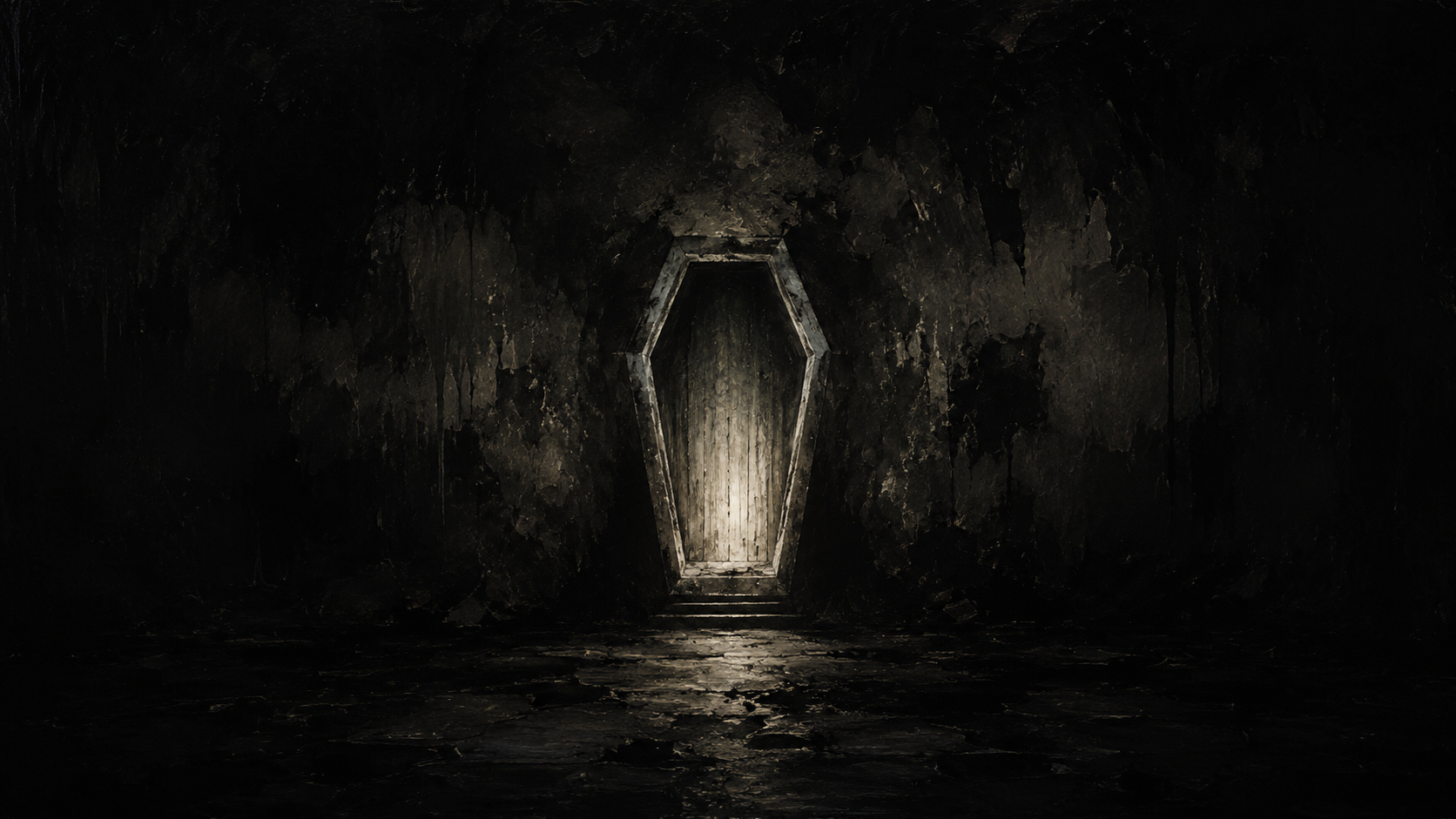
Where the Dark Gets Sharper
I came to Outer Dark almost backwards. It was technically my first read, but because I listened to each section more than once, sometimes immediately doubling back over a scene that felt crucial, it already feels reread. Or, maybe relistened is the better word. With McCarthy, that distinction matters. The sentence arrives by breath and cadence. You do not skim it. You are carried through it or you lose the thread.
This was one of the few McCarthy novels I had not yet read, and part of the strange pleasure of finally entering it was realizing how completely it belongs to the larger body of work. It is early, yes. It is recognizably the work of the same young writer who had written The Orchard Keeper. The same old American darkness is there. The same density. The same fascination with bodies, roads, trees, tools, work, hunger, violence, and the way speech can seem older than the people speaking it.
But, Outer Dark feels more controlled.
In The Orchard Keeper, I could feel McCarthy’s gifts straining against the frame of the novel. That book is remarkable, often astonishing, but the music sometimes overtakes the scene. There were moments when I found myself tracking theme and movement by color more than by character, following a procession of descriptions almost as if the book were teaching me how to read it through shade, stain, rot, and light. The language was already extraordinary, but the balance was not quite settled. Character, event, and setting could blur inside the sheer pressure of the prose.
Outer Dark is no less remarkable at the level of language, but the nightmare has cleaner edges. A woman gives birth. Her brother lies to her. A child is taken. The child is placed in a clearing in a cradle of moss. Rinthy searches. Culla flees. They’re the two main characters—siblings. The world that opens around them is surreal, archaic, and morally diseased, but the central motion is brutally clear.
That clarity makes the darkness heavier, not lighter. McCarthy is not yet the McCarthy of Blood Meridian, but he is closer. The prose and the structure are beginning to serve the same severe vision. The book feels like a fable that has forgotten the purpose of instruction, a parable with the mercy removed, a road story in which every encounter has the shape of a test and almost nobody knows what is being tested.
One of the talents McCarthy is developing here is his dialogue, which will become one of the great unmatchable features of his work. It is present in The Orchard Keeper, of course, but in Outer Dark it begins to feel more essential. People do not simply exchange information. They circle, test, evade, accuse, and pronounce. They talk as if the surface meaning of a sentence is only one layer of what has been said.
That is part of why even the more ordinary conversations feel slightly off-key. A person asks for water. A man offers work. A woman invites Rinthy inside. Someone says he has to get on. None of this is strange in outline. But the speech often feels like it belongs to a world with older rules than the characters understand. Ordinary talk keeps turning ritualistic. A line can sound like hospitality and accusation at once.
That doubleness begins almost immediately.
The opening wound is simple enough to say and almost impossible to set aside. Rinthy has given birth to Culla’s child. Her brother’s child. McCarthy does not build toward this as a revelation so much as let it sit in the air from the beginning, poisoning everything around it. The horror is already present before the story explains itself. The guilt arrives before the facts are fully spoken.
The encounter with the tinker (an old word for a travelling merchant) and his obscene little book of sexual positions comes just before the birth, and at first it has the grotesque comedy of early McCarthy: vulgar, strange, almost cartoonish in its bluntness. Then the scene curdles. Sex in the tinker’s hands becomes diagram, commerce, novelty, a thing to be sold and displayed. In Culla’s world, sex has already become taboo, secrecy, consequence, and terror.
The book keeps setting those registers beside each other. A joke touches an atrocity. A trade touches a wound. A conversation on the road becomes a form of accusation.
Then Culla takes the baby and leaves him in the clearing.
What matters is that he does not simply throw the child away. He places him. That distinction is awful. The moss cradle is one of the first great images in the book because it preserves a trace of care inside an act of abandonment. It is not enough care to protect the child. It is not enough care to claim him. It is certainly not enough care to redeem Culla. But it is care of a distorted kind, or at least the imitation of care.
The gesture feels human and ritualistic. Culla wants the baby gone, but not desecrated. He wants the fact erased, but arranged. The moss becomes a substitute for arms. The clearing becomes a substitute for a room. Nature is asked to do what kinship has refused to do.
That may be the first place where the whole novel opens. Outer Dark is filled with containers that fail: cradles, beds, graves, wells, houses, bodies, names. Places that should hold life or death properly are breached, emptied, violated, or made useless. The child in the moss is not just an abandoned baby. He is the book’s first image of relation broken before language can repair it.
Roles, Names, and the Speech of Power
One of the strangest things about Outer Dark is how populated it is without ever feeling socially whole. Culla and Rinthy move through a world full of people, but many of those people arrive as roles rather than as fully named selves: the tinker, the squire, the shopkeeper, the hiver, the ferryman, the preacher, the man, the woman, the men.
The effect is not emptiness. It is estrangement.
These figures feel like they have stepped out of a folktale or an old moral engraving. They are trades, stations, functions, thresholds. The tinker sells and wanders. The squire owns and watches. The hiver carries the eerie compression of an older word, not quite beekeeper, as if the man has been absorbed into the hive he tends. The ferryman moves Culla across a river and dies in the crossing, turning passage itself into a damaged ritual. The preacher appears near judgment, but as an office more than a person. Religion is present, but it does not redeem the scene by being present.
Against this world of roles, names begin to feel charged.
Culla is Culla, but he also goes by Holme, his surname, when he tries to move through the world as a working man. It is not exactly a false identity, but it functions like a socially usable one. “Culla” feels intimate, exposed, local. “Holme” feels more official, more distant, more fit for wages, labor, and conversation with strangers. He is not inventing himself from nothing. He is leaning on a version of himself that can still pass.
That passing matters because Culla’s whole journey is evasion. He moves away from the baby, away from Rinthy, away from consequence, and into one provisional role after another: laborer, traveler, hired hand, prisoner, almost hanged man. He wants ordinary life to accept him again, but ordinary life keeps turning funerary. He chops wood while the squire watches from a doorway described like the edge of a coffin. He digs graves near hanging bodies. He seeks wages and instead runs. He crosses a river and the ferryman dies behind him.
Even work becomes burial.
Rinthy’s movement is different. She is Culla’s foil, though not in any simple moral arithmetic. Culla flees the fact of the child. Rinthy moves toward it. He tries to become less answerable. She becomes answerable to the point of danger. Her body keeps telling the truth Culla refuses to say aloud. She is still lactating months later. She bleeds. She asks after the baby. She enters houses, towns, and dangerous rooms because the child remains real to her.
That makes her scenes feel more grounded, even when they are just as surreal as Culla’s. Her purpose is plain. She is looking for her baby. Around that purpose, the world becomes grotesque.
A friendly woman tending a garden may offer help, but Rinthy runs when her body begins to reveal her. A house at night becomes threatening when the lantern goes out and men climb into bed. A dinner invitation curdles into a story of dead children and domestic violence. Again and again, shelter becomes exposure. Kindness becomes inquiry. Inquiry becomes danger.
Still, Rinthy’s search is the one force in the novel that feels oriented toward life. Not hope in any easy sense. McCarthy is not kind enough for that. But fidelity. She knows there was a child, and that child is hers.
That is why the named characters begin to matter. Clark, who gives Culla work digging graves, seems attached to death, commerce, and failed exchange. John, the doctor who examines Rinthy, gives her a fragile hope that her continued lactation may mean the baby is alive. Another John later arrests Culla, and his sentence — five dollars or ten days’ work — is almost bleakly comic because it barely differs from Culla’s ordinary condition. He is hungry and homeless and looking for work anyway. Punishment simply formalizes survival.
Names in Outer Dark do not merely make people more realistic. They mark pressure points. Clark names death as transaction. John names bodily hope or pitiful judgment. Harmon, the intellectually disabled man at a fire, names diminished personhood. Culla/Holme names the unstable border between identity and evasion.
Then the bearded one arrives and says the quiet part of the novel aloud.
The camp scene after the river crossing feels like one of the most important scenes in the novel, and also one of the places where McCarthy seems to be experimenting with figures he will later refine.
Culla comes to a fire where there is a bearded old man, a nameless man with a rifle, and Harmon, who sits mostly silent and is treated as diminished by the others around him. The bearded man is not merely called a man. He is repeatedly “the bearded one,” and that word matters. “One” gives him the feel of an entity, a mythic figure, an apparition in human shape. He does not seem to enter the novel as a person so much as a force.
It is difficult not to see him as an early version of McCarthy’s later metaphysical predators. There is something of Judge Holden in him, especially in the way language becomes domination. There is something of Anton Chigurh too, not in the exact philosophy, but in the atmosphere: the way ordinary conversation becomes a terminal test, the way a person suddenly finds himself inside rules he did not know were in force. He is also, strangely, a dark converse of Black in The Sunset Limited. Black uses speech to hold another person in relation. The bearded one uses speech to reduce, expose, and own.
The key line is his claim that you cannot own something unless you have a name for it.
That is not a passing thought. It is the book’s dark grammar made explicit. To name is not merely to recognize. To name is to possess. To hold something in language is to bring it under power. In the camp scene, that power is unequal. The bearded one draws a name from Culla, or at least from Holme, while refusing to give his own. Culla can be named, handled, stripped, questioned, reduced. The bearded one remains unnamed and therefore, within his own terrible logic, harder to seize.
This is where Culla becomes almost pitiable. Not innocent. Not absolved. But pitiable. He is outmatched. The man who abandoned the child now meets a figure who understands abandonment’s metaphysics better than he does. Culla refused relation because relation would condemn him. The bearded one understands that what is not properly named and claimed may be taken.
The scene also makes Culla smaller in a way that anticipates later McCarthy. He is stripped. His boots are wanted. His means of passage, work, and self-possession are threatened. It recalls, from the other end of McCarthy’s career, the stripping of the thief in The Road, when the body is reduced almost to bare exposure. McCarthy returns again and again to this image: a human being deprived of the objects that let him appear socially intact.
In Outer Dark, that reduction has been happening for a long time. Culla begins by trying to flee his guilt. The world answers by removing the supports of ordinary personhood: name, work, wages, safety, shelter, shoes, dignity. By the end, even survival feels less like escape than punishment extended through time.
Cradles, Wells, Graves, and Meat
Death in Outer Dark is everywhere, but it is rarely ceremonious in the way we expect death to be. Men dig up graves. Bodies hang from trees. A murdered man appears at the opening of a chapter and is barely described. Millers are hanged, then the novel moves on. Clark hires Culla to dig graves for bodies hanging in town, and even the arithmetic of burial seems off. Three bodies. Two graves here. Other men digging elsewhere. Maybe that accounts for it. Maybe it does not.
The novel does not always pause to clarify because clarification is not the point. Death is casual and everywhere. People mention dying almost as part of the weather of conversation, though the book itself is too severe for weather to remain only weather. Death has become one of the ordinary textures of the social world.
That is part of what makes the book so cruel. Human institutions remain. There are shops, auctions, houses, beds, meals, wells, preachers, laws, wages, sentences, jobs. But these institutions do not protect much. They mostly show the shape of protection after the substance has gone.
The old man at a well may be the cleanest example. He tells Culla, more than once, that he would not turn Satan away for a drink. On the surface, it is radical hospitality. Thirst overrides judgment. Even Satan receives water. But when the line is spoken to Culla, it becomes an unconscious accusation. Culla is not Satan in some flat allegorical sense, but he is a fallen, exiled, damaging presence. The world keeps seeming to recognize him without knowing his facts.
The well itself carries that pressure. The old man talks about how it used to be a spring. A spring is open, moving, given. A well is enclosed, dug, owned, and darkened. That may be too neat if treated as a symbol, but McCarthy rarely needs symbols to behave neatly. The image still matters. Water has gone from natural source to guarded hole. Then the old man shows off his excessive shotgun, and even hospitality becomes armed.
After Culla leaves, three men enter the old man’s house and murder him. The line turns black in retrospect. The old man said he would not turn Satan away. Then he lets in something very close to hell.
That is McCarthy’s early genius in this book: mercy and danger are not opposites. A house can shelter and expose. A well can give water and lead to murder. A bed can promise rest and become a place of implied violation. A grave can hold the dead until someone digs it open. A sentence can punish and feed. A preacher can speak of salvation while standing inside a world that does not feel saved.
The symbolic imagery accumulates without ever settling into a code. The baby in the moss is a cradle and an abandonment. The squire’s doorframe becomes coffin-like while Culla works under his gaze. The hanged bodies are public death without adequate public grief. Turnips Rinthy takes are almost comic in their smallness beside the violence around her, yet property still matters enough to be noticed in a world where bodies barely are. The ferryman should help Culla cross, and he does, but the crossing kills him and another passenger. The river becomes passage, danger, and judgment at once.
Again and again, the book takes an ordinary human form and shows it failing at its task.
Cradles do not protect. Houses do not shelter. Graves do not keep. Work does not pay. Law does not clarify. Speech does not always reveal. Names do not always save. Food does not nourish without suspicion.
That last point becomes important near the end because of the meat Culla eats at the bearded one’s insistence. The meat is described as stringy, and Culla cannot tell what kind it is. The bearded one does not clarify. Instead, he offers different possible answers, keeping the thing unnamed even as Culla eats it. This is not an explicit scene of cannibalism, and I do not want to make the book more literal than it is. But McCarthy knows exactly how to charge an unnamed meat with dread. He will return to cannibalism and the horror of human bodies turned into food in later work. Here, even without confirmation, the implication is heavy enough.
That ambiguity makes the final handling of the baby feel even more grotesque. Culla has already been made to eat what he cannot identify. He has already accepted something from the bearded one without being able to name it. Then, later, he hands the baby to that same figure, as if he still has not understood that the inability or refusal to name a thing does not make it harmless.
It makes it available to the worst possible meanings.
The Road After Judgment
Near the end, Culla is led to be hanged, and for a moment it seems the book’s ambient death has finally turned toward him. He has seen bodies hanging. He has dug graves. He has passed through towns where corpses seem nearly civic. Now he is almost one of them. Yet even this does not resolve into clean judgment. He escapes, and McCarthy does not give the escape the dignity of dramatic description.
That omission is perfect. The rope was never the real sentence. Culla’s punishment is that he goes on.
The final confrontation with the bearded one brings nearly every thread together.
The tinker has been caught and hanged. Rinthy is nowhere to be seen. Culla has the baby now, the child he once abandoned in moss, and the baby is wounded, missing an eye. When the bearded one asks for the child, Culla hands him over. The baby is described like a dressed rabbit, dangling, with one eldritch eye blinking.
It is one of the most horrifying images in McCarthy’s work, and not only because of what happens next. A dressed rabbit is an animal prepared as meat. Skinned, handled, made into object. To describe the baby this way collapses the human child into prey, carcass, sacrifice, commodity. Yet he is alive. He blinks. He remains a person at the very moment the language shows how thoroughly the world has failed to treat him as one.
The earlier ambiguity of the meat makes this worse. The bearded one presides over a world where bodies, food, animals, children, and ownership begin to blur in the most obscene ways. Culla has eaten under that pressure. Now he yields the child under it. The baby is not literally described as food, but the dressed rabbit image drags him into that field of meaning. Life is handled as meat. A child is held as prey. The human is reduced to the edible, the owned, the killable.
Then the bearded one asks for the baby’s name.
He has none.
And the bearded one kills him.
That is the novel’s naming theme in its most terrible form. Earlier, Culla left the child unnamed, unclaimed, and hidden. He did not only abandon the baby physically. He abandoned him linguistically and morally. To name the child would have been to admit relation. Father. Mother. Brother. Son. Sin. Responsibility. Kinship. Instead, Culla tried to leave the child outside the human order.
Rinthy never needed a formal name to know him. Her body knew. Her search knew. Her milk, bleeding, and grief kept saying what Culla would not: there was a child, and he was hers. But, she is absent when the child is handed over. The one person whose relation to him is grounded in love is not there. The child passes from the man who would not claim him to the man who understands naming only as possession.
The horror is not that the child is unnamed and therefore free. It is that the child is unnamed and therefore unprotected.
This may be the bleakest knowledge in Outer Dark. Evil does not enter only through wild violence or monstrous figures. It enters through the failure of ordinary human forms: names, kinship, shelter, work, law, burial, hospitality, religion. The structures are still there, but they do not hold.
By the end, Culla is years older, walking the road, speaking with a blind man. This blind man has already been mentioned by the preacher as someone he saved, the subject of his best sermon. But the ending does not offer him as proof that the world has been redeemed. He is still blind. Still on the road. Still part of the same damaged landscape. The preacher’s story may have converted him into evidence. The actual man exceeds the sermon.
The echo forward to The Road is hard to miss. McCarthy returns later to another blind man on another road, another encounter that tests mercy, suspicion, and what human beings owe one another when the world has been stripped down. Here, the blind man feels even colder. Culla can see, but he has moved through the whole novel in moral darkness. The blind man lacks sight, but Culla is the one who has failed to recognize what stood before him: the child, Rinthy, guilt, responsibility, relation.
Again and again, Culla tells people he has to get on. The phrase begins as ordinary road talk, but it becomes something deeper. He has to get on because he cannot stay. Staying would mean questions. Questions would mean names. Names would mean relation. Relation would mean judgment.
That anticipates The Sunset Limited, where White repeatedly insists that he has to go while Black tries to hold him in speech, food, and witness. Culla says he has to get on because he is fleeing consequence. White says he has to go because he is fleeing relation. In McCarthy, the desire to leave is rarely just movement. It is the refusal to remain answerable.
That refusal defines Culla. He survives, but survival is not mercy. He gets on, but getting on is not freedom. He walks away from the child, then through a world that keeps showing him what abandonment has already done. By the end, there is no redemption, no balancing of accounts, no final sentence that makes the horror morally legible.
There is only the road, the blind man, and the dark that has been there from the beginning.
Outer Dark is early McCarthy finding his footing by narrowing his field. The prose still has the old music, but now the music serves a more terrible design. The dialogue is already becoming one of his great instruments, not decoration but pressure, not banter but trial. His characters do not merely speak. They test the world by speaking, and often the world answers back with death.
The novel is bleak, heavy, and full of implication from its first pages, yet it is not merely an exercise in darkness. It is a study of what happens when the forms meant to hold human life collapse from within.
A child is born and not named. A mother searches and is not believed enough by the world to be protected. A brother becomes a father and refuses both words. A bearded figure names in order to own. The road continues. The dead are buried or not buried. The saved remain blind. The guilty keep walking.
In Outer Dark, judgment arrives everywhere.
Justice almost never does.
Darkness
It seeps like mud
Mud through old buried things
Bodies, graves, and the search for hope
Not found