Kyiv Is Still the Capital
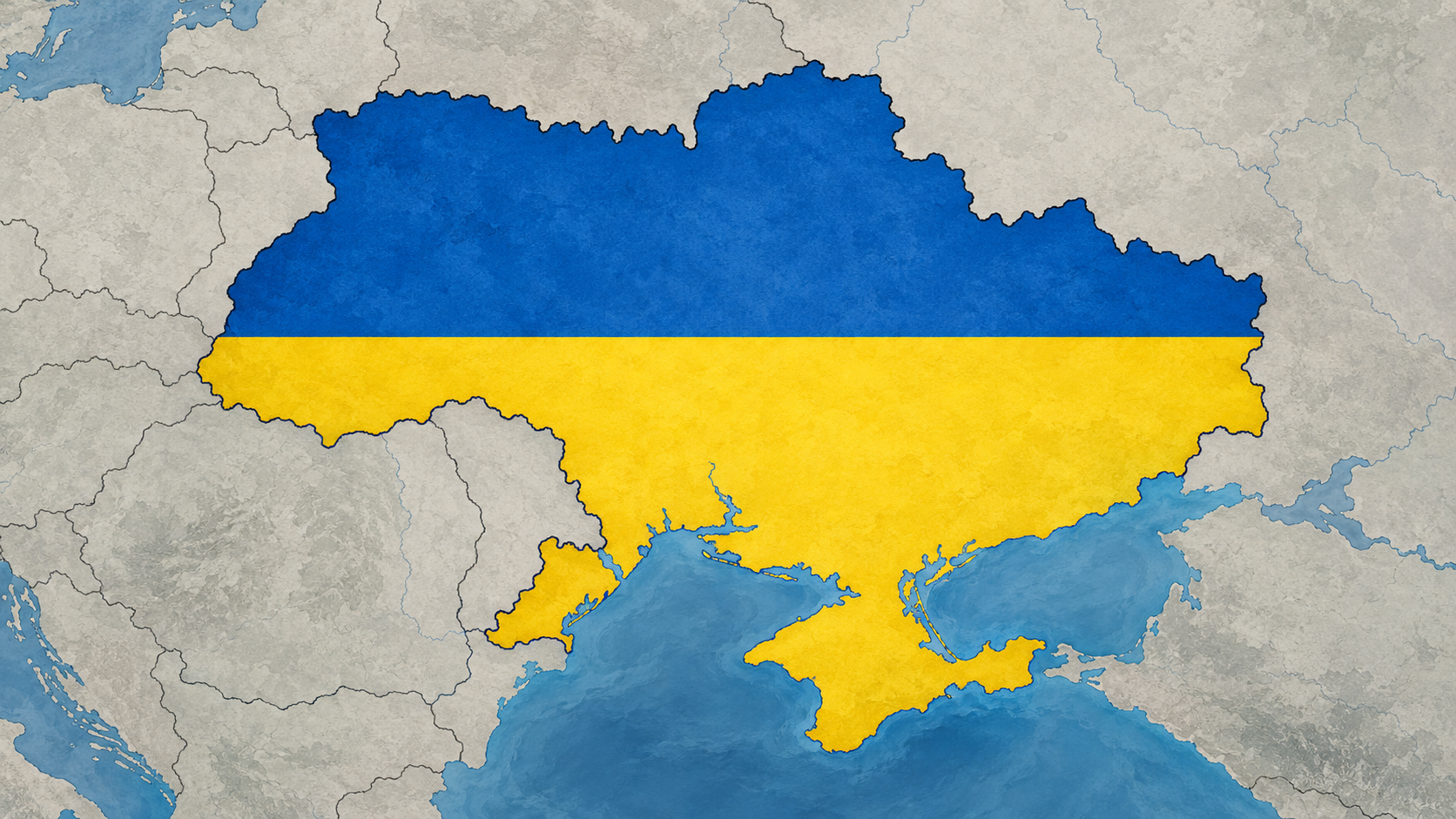
The war did not begin in February 2022.
Russia seized and annexed Crimea, the peninsula extending from southern Ukraine into the Black Sea, in 2014. It then backed, armed, and participated in the war in the Donbas, Ukraine’s eastern industrial region, centered on the Donetsk and Luhansk provinces. What began on February 24, 2022, was the full-scale invasion: an enormous escalation of a war already eight years old.
That distinction matters. So does remembering what Russia expected that escalation to accomplish.
Later analysis by the Royal United Services Institute, drawing on intelligence and captured Russian orders, found that Russian forces intended to occupy Kyiv, Ukraine’s capital on the Dnipro River in the north-central part of the country, within roughly seventy-two hours. The plan depended on Ukrainian political and military resistance collapsing rapidly enough for occupation to follow.
Kyiv did not fall.
It is now October 2026. More than four and a half years after the full-scale invasion began, Ukraine remains an independent country.
I think that fact deserves a little space before we hurry toward the next qualification. It does not mean Ukraine is winning every battle, that its position is secure, or that the ending is already written. It means a country whose independent existence Putin treated as a historical error has survived his attempt to correct it.
A campaign premised on rapid collapse became one of the defining wars of this century. Ukrainian resistance made the difference.
It is essentially the only news story I still follow closely. I do not have the bandwidth to follow much news anymore. But, I cannot ignore this one.
The Past he Wants Back
Putin has explained enough of his thinking that I do not need to supply a cartoon version of it.
In his 2021 essay, “On the Historical Unity of Russians and Ukrainians,” he described the two peoples as “one people – a single whole.” He argued that the “true sovereignty of Ukraine” was possible “only in partnership with Russia.” His speech immediately before the invasion portrayed modern Ukraine as a creation of Bolshevik policy, assembled in part from lands he considered historically Russian.
What troubles me is the condition buried inside that supposed recognition of sovereignty. Ukraine may exist, provided it understands its existence as Putin does. Its people may choose, provided their choice does not separate them from the history he has assigned them.
He was a KGB officer. He has described the Soviet collapse as a geopolitical catastrophe and, more recently, as the disintegration of historical Russia. But, saying he simply wants to rebuild the Soviet Union makes his thinking tidier than it is. He can mourn Soviet power while condemning Lenin for the national arrangements that helped constitute it. He can reach back beyond communism to imperial territory and a supposedly unified Russian world.
The common thread, as I read him, is less a coherent loyalty to one past than a claim to the power several different pasts once supplied. Imperial Russia, Soviet greatness, the security state: their contradictions become secondary when each can justify Moscow’s authority over somebody else.
The people living there now are expected to accommodate the map.
What I Mean by Evil
I do not use the word evil casually. But, I have come to regard Putin as an embodiment of it.
That is my moral judgment. It is not a clinical diagnosis or a neutral historical classification. It comes from what he has chosen to do: launch this invasion, attempt to extinguish another country’s independent political life, and sustain a war whose suffering has long since become impossible to mistake for an unforeseen consequence.
International investigations have documented war crimes committed by Russian forces. UN investigators have found systematic torture by Russian authorities. They have documented the deportation and forcible transfer of Ukrainian children, concluding in 2026 that these practices also amounted to crimes against humanity.
I also think of the massacre in Bucha, a town northwest of Kyiv. Investigators documented civilian executions and torture committed by Russian forces during their occupation in March 2022. Bucha became one of the war’s most recognizable names, but it was not an isolated exception. UN investigators documented unlawful killings in many other occupied towns and villages. I do not need to repeat the worst details to remember that these were people who should have been able to remain safely in their own homes.
Then there is Mariupol, a major port and industrial city in southeastern Ukraine on the Sea of Azov. A Russian airstrike hit its maternity and children’s hospital on March 9, 2022. An OSCE expert investigation concluded that the attack constituted a war crime.
A maternity hospital was hit during a war of aggression.
That should be enough. I do not need to spend another page making the scene more terrible than it already was.
And, this is still happening. On September 24, 2026, a Russian missile attack damaged a maternity hospital in Kyiv. Reuters reported that one person was killed in its parking lot, while no patients or medical staff were injured. They had taken shelter. According to Ukraine’s presidential office, a boy was born in that shelter during the attack.
The reporting does not establish whether the hospital was deliberately targeted. But, given Russia’s documented record of attacks on civilians and civilian infrastructure, I strongly suspect it was. I will not pretend that suspicion is a proven fact. I also will not pretend the rest of the war gives me much reason to extend the benefit of the doubt.
More than four years after Mariupol, women are still giving birth in shelters while Russian attacks damage maternity hospitals. This is not a horror safely confined to the opening weeks of the invasion.
Sometimes it feels as though another month cannot pass without the Russian military or state apparatus producing another atrocity. That is a description of my exhaustion with the record, not a claim about some inherent quality of Russian people.
I want accountability to mean more than calling somebody a war criminal online. It means investigators preserving evidence, identifying victims and perpetrators, establishing responsibility up the chain of command, and prosecutors bringing cases where courts have jurisdiction. It means proof and fair trials, including when the accused is someone I already despise.
My anger cannot do that work. I want the work done.
Where the Drones Go
One contrast has increasingly shaped my attention: what each side is trying to disable.
Ukraine’s long-range campaign reaches into the systems that keep Russia fighting: military facilities, ammunition storage, air bases, fuel supplies, drone production, and the logistics connecting them. Many of those attacks use drones: uncrewed aircraft carrying explosives to distant targets. Russia strikes military targets too, but its continuing bombardment also reaches Ukrainian homes, hospitals, ports, and power systems. People far from the front live with the consequences, from an apartment destroyed in seconds to electricity and heating repeatedly taken away.
Oil makes the Ukrainian strategy particularly legible. An army needs fuel. Russia’s hydrocarbon industry also brings in revenue that helps finance the state conducting the invasion. Damaging refineries and fuel infrastructure can therefore impose costs well beyond the damaged machinery. The campaign has continued into this autumn; its importance is no longer hypothetical.
That explains a strategy. It does not establish the legality of every target. Economic value alone is not enough to make a civilian facility a lawful military objective. Its military contribution, the anticipated advantage, the foreseeable harm to civilians, and the precautions taken all matter. Those questions apply to both countries.
Wildberries makes the difficulty harder to look away from.
It is Russia’s enormous Amazon-like online retailer, which is not a business I expected to become familiar with through a war. During 2026, Ukrainian drones repeatedly struck its logistics warehouses deep inside Russia. Ukrainian officials have said some facilities supported military supply chains, including the distribution of drone components and navigation equipment. Wildberries has denied military involvement.
The attacks and destruction have been independently reported. The asserted military role of each particular warehouse has not been independently established by the reporting I have seen. Those are different levels of knowledge, and I need to keep them separate.
Civilian warehouse workers have been killed and wounded in these strikes. They belong in the account. They do not become an awkward detail to omit because I want Ukraine to succeed.
I understand a defending country trying to damage the machinery sustaining an invasion. I also see a meaningful difference between that purpose and an aggressor’s repeated destruction of the invaded country’s civilian infrastructure. But, a claimed purpose cannot settle every case. If the evidence for a target is inadequate, or civilian harm is unlawful, my sympathies cannot repair the argument.
War does not become clean because I know which country was invaded.
A War That Keeps Changing
The war being fought now is not the war of February 2022.
Javelins and NLAWs, portable anti-tank weapons carried by infantry, became early symbols of Ukraine’s defense, although the defense of Kyiv involved much more than those weapons. By that summer, HIMARS, a truck-mounted system firing precision-guided rockets, was helping Ukraine strike ammunition depots and other logistical dependencies farther behind Russian lines. The question increasingly became whether an army could keep supplying the forces doing the fighting.
Later deliveries of longer-range weapons and better air defenses, systems that intercept aircraft and incoming missiles or drones, changed what Ukraine could reach and protect. But, the most pervasive transformation has been the growth of drones, from small aircraft watching a road or attacking a vehicle to weapons striking hundreds of miles away.
Russia has learned too. Its use of attack drones and battlefield surveillance has developed throughout the war. Glide bombs, fitted with wings and guidance, let its aircraft strike from farther away. Electronic warfare disrupts the signals weapons and communications depend on. A comforting picture of permanent Russian incompetence would be dangerous even if I were only trying to understand the news.
The adaptation does not stop. Radio links are jammed; systems and tactics change to get around the jamming. Drones hunt other drones. This autumn, reporting on faster, jet-powered Russian attack drones describes Ukrainian defenders and manufacturers racing to build interceptor drones that can catch and destroy them. Yesterday’s solution can become insufficient with frightening speed.
Something effective for six months may become much less useful once the other side understands it. There is no final invention after which everyone can stop learning.
I find that technically fascinating. I also find it horrifying. This has become an enormous laboratory for warfare in which the failed experiment may be a person who does not come home.
Both things are true. I want to understand how the systems work, and I have to remember what working means.
Recently, there have also been changes on the ground that feel particularly significant. In late September, Ukraine reported retaking more villages around Lyman, a small city and important railway hub in the northern part of Donetsk province, during Operation Vivaldi. Those advances followed gains earlier this year in the southeast. ISW assessed that the Lyman operation had disrupted Russia’s effort to encircle a network of important Ukrainian defensive cities. The significance extends beyond another patch of color changing on a map.
It has begun to feel to me as though the tide may be turning. I do not know whether that will continue. Russia is still advancing in other places, and local successes do not guarantee a lasting shift across the whole war. But, seeing Ukraine recover ground and interfere with Russian plans matters. I do not want caution to become another way of treating Russian progress as inevitable and Ukrainian progress as something too provisional to count.
Why This Story Stays
My regular sources include the Kyiv Independent, the Kyiv Post, the Institute for the Study of War, and The Telegraph’s Ukraine: The Latest podcast.
They offer different ways of following the same catastrophe: reporting from inside Ukraine, operational assessments, maps, interviews, and sustained conversation. ISW’s assessments are analysis, not revelation. Ukrainian journalists are reporting on a war in which their own country is fighting for survival. That gives their work urgency and proximity; it does not remove the need to check consequential claims against independent reporting and investigations.
I do not think being on Ukraine’s side requires me to stop noticing where information comes from.
Part of why I keep returning is that the central moral distinction remains unusually plain to me. A much larger country invaded its sovereign neighbor and tried to dictate the terms on which that neighbor could exist. The complications are real, but they have not dissolved that fact.
I wish the United States were doing more to help Ukraine defend itself. Trump said he would end the war in twenty-four hours. He did not. But, this is not an essay about Trump, and I do not want Ukraine reduced to another argument about him. My concern is what Ukrainians need to survive a war they did not choose.
Another part is watching people continue to respond to circumstances that were supposed to overwhelm them. They adapt, argue, improvise, fail, and try again. The country has not behaved like the passive object of somebody else’s history.
I do not need to turn that into a story about superheroes. Ukraine has corruption. Its government and military make mistakes. Ukrainian forces can commit crimes, and UN reporting has documented mistreatment of Russian prisoners. Allegations deserve investigation under the same laws, regardless of which uniform the accused wears.
Ukraine is a real country. Its people do not need to be saints to possess the right not to be invaded.
Other suffering matters. My attention is not a reliable measure of the world’s need. But, this is the story I have stayed with long enough to recognize changes, to remember earlier expectations, and to understand something of what another year of resistance costs. I keep wanting to know what happens to these people next.
Historical Russia
I return to Crimea because the language used to claim it contains so much of the larger argument.
The peninsula has a history that exceeds any convenient national summary. The Crimean Khanate, a Crimean Tatar state, existed for centuries before Catherine the Great’s empire annexed it in 1783. Imperial rule gave way to the Soviet period. In 1954, Crimea was transferred from the Russian Soviet republic to the Ukrainian Soviet republic. It remained within Ukraine when the country became independent in 1991. Russia seized and annexed it in 2014.
Even that compressed sequence leaves enormous things out, especially the Crimean Tatars, an Indigenous people whose homeland too often becomes a possession for Moscow and Kyiv to argue over in other people’s accounts. Stalin deported them en masse in 1944. Their history, return, and renewed persecution cannot be reduced to a footnote beneath somebody else’s claim of belonging.
I also have a slightly odd reaction here as a reader.
I have spent a lot of time with nineteenth- and early-twentieth-century Russian literature, especially Chekhov. Crimea was part of the Russian Empire during his lifetime. He spent important years in Yalta, a resort city on Crimea’s southern coast overlooking the Black Sea. I am not recruiting him as a witness to a position he did not take.
But, the past I encounter in those books feels more particular and complicated than Putin’s retrospective maps: different regions, communities, languages, classes, and people who do not fit neatly into the purposes later assigned to them. That is an impression formed by reading, not historical evidence. Still, it makes the suggestion of an eternal, self-evident Russianness feel strange.
Russian history in Crimea is real. It is not the only history there, and it does not create a perpetual right of possession.
Empires have always been good at looking backward and discovering that wherever they once ruled was naturally theirs. Sovereignty cannot depend on which empire gets to choose the date.
Nearly Five Years
I do not know how this war ends.
I do not know what Ukraine will recover, how long outside support will last, what will happen politically in Russia, or which adaptation will change the battlefield next. I do not know what a settlement will look like or whether it will give Ukrainians lasting security. Endurance is not a prediction of victory.
Nor is it an adequate description of the price. People have been killed, displaced, tortured, bereaved, and permanently injured. Children have grown up under air-raid alerts. Families have spent years trying to find one another. Remaining an independent country has required losses that no sentence about resilience can repay.
I am not following this war because I enjoy war. I can find the maps interesting and the technology remarkable while wishing none of it were happening. I am not trying to become a cheerleader. I do not need Ukraine to be flawless, or every individual event to resolve into a perfectly clean moral picture.
Russia invaded Ukraine. Ukraine did not launch a war to erase Russia as an independent nation.
Putin has repeatedly invoked history to make another people’s sovereignty conditional. Ukrainians have spent years answering him with the continued existence of their country.
The broader war has lasted since 2014. The full-scale invasion is approaching five years. The city Russian planners expected to occupy almost immediately is still the capital of Ukraine.
There is an enormous amount I do not know about what happens next.
But, Putin was wrong about that.
The Ukrainians made sure of it.
Evil embodied
No question about it
When will this end?