A Voice That Came Back Without Me
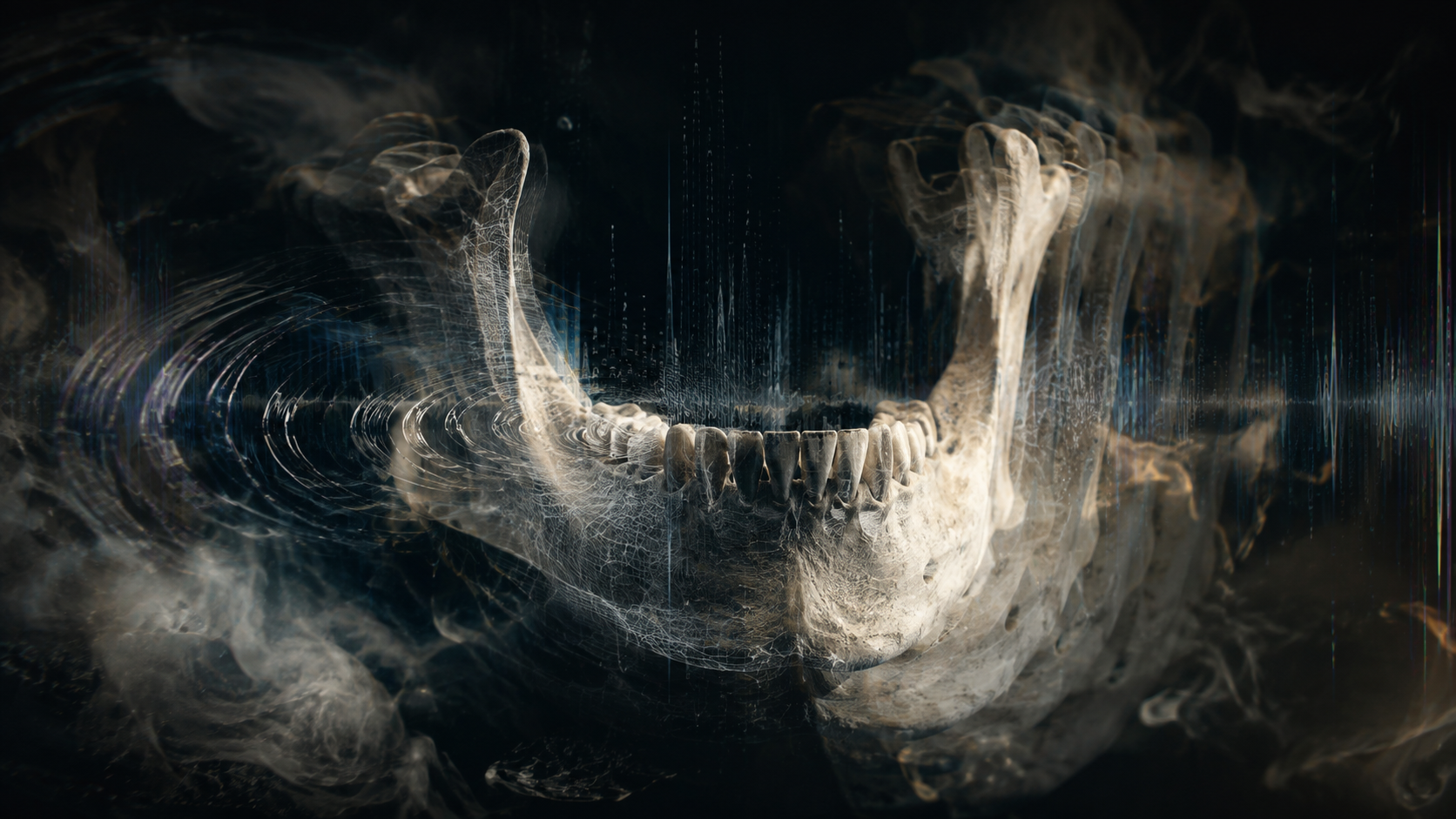
My voice had not been perfect for quite a while, but about a year ago it took a fairly dramatic turn.
This happened just after I left work, which is almost suspiciously tidy timing but, as far as I know, entirely coincidental. I worked remotely and did not have to speak that often anyway. Still, it would have been one more difficulty layered onto the others. One more ordinary professional task becoming less ordinary. One more meeting or phone call that required me to operate equipment no one else could see failing.
Since then, speaking has become less fluid, less predictable, and sometimes nearly impossible beyond the simplest exchanges. The thoughts are still there. Usually far too many of them. The route outward has changed.
Sometimes it feels less like I have lost my voice than like it has become detached from me. I can hear what I mean internally, complete with timing, emphasis, and the exact pressure behind a joke. Then I speak, and another version enters the room. Slower. Warped. Wearing an expression I did not choose.
My own sentences sometimes arrive as though they have traveled a much greater distance than the few inches between my brain and my mouth.
Some do not arrive at all.
Recently, I was talking with my uncle. We do not make small talk. Neither of us has much interest in spending fifteen minutes discussing traffic before admitting we called for a reason. I wanted to tell him about what I have been making: the essays and stories, the generated songs, the images, and the strange process by which one piece now becomes several related things.
There was a lot I wanted to say.
I could barely say it.
That kind of moment is frustrating in a very specific way. I was not struggling to find the ideas. I knew what I wanted to explain. I could see the shape of it clearly enough in my head: how AI has become part accessibility tool, part collaborator, part creative playground; how an essay can now produce a song or an image; how the entire process has given me new ways to keep making things while my body has made older ways harder.
All of it was intact internally.
Almost none of it could cross the distance between us.
The People who Hear Two Voices
I have written about my speech before. I have written about Christa repeating the small things for me when someone cannot understand. I have written about the strange relief of stepping outside fast-moving conversations. I have written about the page as a place where I can still finish.
Still, the difficulty feels uniquely present right now.
There is something especially painful about being unable to speak fluently to the people who knew you when you could. I cannot say much more about that yet. Even this paragraph feels close to a boundary I am not interested in crossing simply to make the essay more complete.
But, Christa has known me since we were teenagers. My parents have known every version of my voice. They remember its speed, its tone, the way I used to enter a conversation and keep going until someone wisely intervened.
They remember a voice I remember too, though I no longer hear it clearly from inside myself.
They know I am still the same person within this increasingly unreliable machinery.
That knowledge helps. It also gives the loss a sharper outline.
A stranger meets the voice I have now and might assume it has always belonged to me. The people closest to me hear something else beneath it. They hear the current sentence and the sentence as it might once have sounded. They hear me speaking over my own absence.
They hear two voices.
Only one of them is in the room.
The Obvious Solution
For a while, I have said that I eventually want to clone my voice and attach readings to the posts on Open Doors.
The idea makes obvious sense. My writing is already surrounded by other forms. There are images, songs, and poems. A spoken version of each essay would make the work more accessible and give readers another way into it. Using something resembling my own voice would seem more personal than choosing a generic narrator.
It is also precisely the sort of thing AI should be able to do as adaptive technology.
When a person loses access to one route of expression, technology can help build another. That is not science fiction anymore. It is not even especially unusual. Synthetic voices have been helping people communicate for years, and newer systems can preserve far more individuality than the older mechanical voices could.
Then my brother-in-law built a voice-cloning tool.
He was trying to help both me and a friend of his who has ALS. I assume he built it with Claude Code or something similar, although the technical details are not really the point here. Naturally, I have questions about the model, the recordings, the architecture, and how the whole thing works. The fact that part of my mind immediately wandered toward implementation details is so predictable that it barely qualifies as a personality trait anymore.
But, the technical questions can wait.
He recently sent Christa a sample of my cloned voice.
It was good.
That was the problem.
Someone Else Had my Voice
Christa listened to it and told me that it sounded good, but it was not me.
She said this through a few tears.
It was not sadness exactly. Grief is probably closer, although even that word feels too stable. Grief usually knows what has been lost. This was more like briefly recognizing someone who should not have been able to enter the room.
The voice sounded familiar. It carried some of my old shape, cleaned of effort and interruption. It spoke with the confidence of a body that had never failed to produce the next word. It sounded like me if my voice had continued somewhere else after leaving me behind.
And, it was not me.
When I heard it, I did not react much outwardly.
Internally, something in me recoiled.
Not dramatically. I did not throw the phone or demand that it be turned off. I listened. Then I listened again, because the first hearing had left me unsure what I had heard.
Part of me was impressed. Part of me was looking for a defect that would restore the proper distance between the imitation and me. A flattened vowel. An unnatural pause. Some small mechanical scar that would let me dismiss the voice as an interesting approximation.
There were imperfections, certainly, but none explained the feeling.
The real problem was that it had crossed too much of the distance.
It sounded close enough that I could recognize myself, but not close enough that I could enter it. The voice seemed to know me without containing me. It carried my surface while remaining empty of whatever I had assumed the surface carried.
For a moment, I had the peculiar sense that I had been reduced to evidence. A collection of recordings had been examined, divided, and reassembled. Now something outside me could produce sounds that once required my body.
It could speak more easily than I could.
It could say new words in an old voice.
It seemed both younger and bodiless, like a memory that had continued developing after the person remembering it was gone.
I did not cry. I did not say much. That lack of reaction was not emptiness. It was a kind of alarm without motion. I felt as though any strong response might make the voice more real, or invite it closer.
I understood why Christa was affected. I felt something related, though not identical. There was grief in it, certainly, but also fascination, resentment, recognition, and something almost like jealousy.
The machine had been given a version of my voice that my body no longer seemed able to access.
Now it could use that voice whenever it was asked.
The sample was meant as a gift.
It was a gift.
It also felt like hearing someone unlock a door with a key made from my bones.
Perhaps that is the most honest description. I have not decided what the voice means yet.
Evidence That Learned to Speak
A cloned voice occupies an odd position. It is not simply a recording.
A recording captures something I actually said at a particular moment. The breath, timing, mood, and imperfections all belonged to that moment. Even an old recording is evidence. I was there. I made those sounds. The voice may belong to the past, but it remains attached to an event.
The clone has no event.
It can say words I never said. It can read an essay I wrote after the source recordings were made. It can laugh without finding anything funny. It can hesitate because someone inserted a pause. It can continue producing my voice without the body that once produced it.
It is evidence that has learned how to invent new evidence.
That may be the part I cannot quite accept.
A recording says: this happened.
A clone says: this could have happened. This might still happen. Listen closely enough and perhaps the distinction will stop mattering.
But, it matters to me.
The clone does not remember saying anything. It has no relationship to the words beyond the arrangement of sound. It does not know Christa. It does not know my uncle. It does not know why one sentence should be spoken softly or why another should be allowed to break.
It only knows what I sounded like.
Or, what I sounded enough like to be reproduced.
That “enough” carries more weight than I expected.
The Body Inside the Sound
It is easy to think of a voice as a collection of measurable traits: pitch, rhythm, tone, accent, cadence. Capture enough of those traits and the machine can reproduce the sound.
Technically, that may be true.
Personally, I am less sure.
A voice is also timing. It is hesitation. It is the pressure behind a joke. It is the slight shift that tells Christa whether I am being serious or only pretending to be serious for comic effect. It is breath and attention and the physical fact of a person trying to reach another person.
My current voice includes strain. I do not like that, but it is true. It includes delays, altered sounds, and moments when the emotion carried by the sentence is not the emotion I intended. Those qualities can misrepresent me. They are symptoms, not revelations of my deeper character.
Still, they are part of how I sound now.
The clone removes them.
That should feel like restoration. In some ways, it does. In other ways, it feels like being impersonated by a healthier relative who has inherited my memories but not my life.
Maybe the problem is that the clone does not return my old voice. It produces a new object assembled from traces of the old one. It is not the person Christa remembers, and it is not the person sitting beside her now.
It is a third thing.
That third thing can speak beautifully.
It does not get tired. It does not stumble. It does not lose the sentence halfway through. It does not become harder to understand as the day continues. It can keep speaking in my voice after I stop.
It could keep speaking when I am not in the room.
Eventually, it could speak when I am no longer anywhere.
That possibility has always existed through recordings, of course. But, a recording repeats the dead past. A clone manufactures a living present. It could say good morning tomorrow. It could read an essay I have not written yet. It could tell my children something I never thought to tell them.
It could produce an endless supply of moments that sound remembered but never occurred.
I do not yet know whether I want that thing speaking for me.
The Deeper Uncanny Valley
People usually describe voice cloning in terms of the uncanny valley. The technology gets close enough to a human voice that the remaining imperfections become more noticeable and unsettling.
I suspect there is another uncanny valley beneath that one.
Even if the technology becomes flawless, the emotional problem may remain. Perhaps it will become sharper. A perfectly cloned voice might sound exactly like me while still lacking the physical act of me saying anything.
It could read every essay with perfect fluency. It could place emphasis where I tell it to. It could pause correctly, catch the raised eyebrow, and pronounce every name. It could probably sound more like my remembered voice than I do.
That would be an extraordinary accessibility achievement.
It would also be very strange to sit beside Christa while a machine spoke to her in the voice of the person sitting silently beside her.
Both things can be true.
That is where I keep landing with AI. The tools are real. The access they provide is real. So is the discomfort. I do not think we need to resolve that tension by declaring the technology either miraculous or grotesque.
Sometimes a tool can restore access while also revealing that restoration is not the same as return.
There is something unsettling about the direction of the imitation. Usually, technology tries to sound more human. Here, it is trying to sound specifically like me, while I am increasingly unable to meet it there.
The machine is learning to speak as I used to.
I am learning to live with speaking as I do now.
It improves by approaching the voice I lost.
I adapt by moving farther from it.
Somewhere between us is a voice that belongs cleanly to neither, waiting to be given words.
Not Yet
I still think I may eventually attach cloned readings to my work.
The essays should be heard. I revise them by listening, and part of me likes the symmetry of sending them outward the same way. There is something fitting about the voice returning through the writing that became necessary when speaking grew difficult.
But, I am not ready.
Not in the near future, anyway.
Maybe I will be ready when the technology gets fully beyond the uncanny valley. Maybe I will get used to hearing it. Maybe Christa will too. Maybe, after enough time, the cloned voice will stop feeling like an imitation and become simply another tool I use, no stranger than the generated songs or images.
Or, maybe technical improvement will not solve the part that feels wrong.
Perhaps the flaws are not the uncanny part.
Perhaps the uncanny part is success.
For now, the essays can remain on the page. The songs can sing around them. Other voices can read the words, or no voice can read them at all.
My own imitation can wait.
I am still here. I am still finding ways to say what I mean. The words still get out, though they take different routes now.
I am just not ready to meet the voice that came back without me.
It wasn’t like me
Or, maybe too much like me
I wasn’t ready