The Writers Start Talking to Each Other
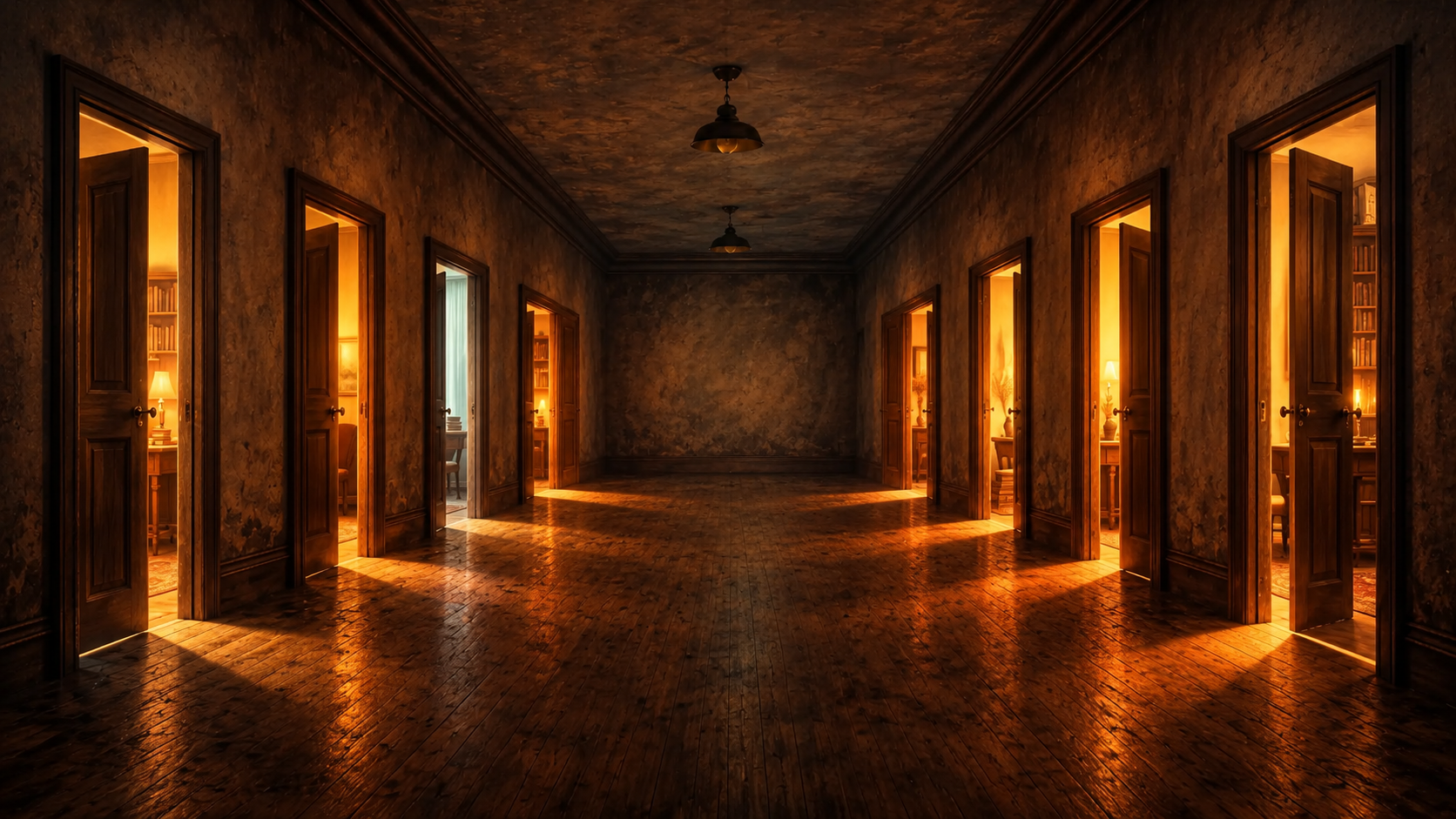
I seem to be expanding the reading project.
This was probably inevitable. In “Eight Writers at the Desk”, I named the particular crowd whose influence I keep finding in my own work: Cormac McCarthy, David Foster Wallace, Raymond Carver, Ted Chiang, Fyodor Dostoyevsky, Anton Chekhov, Nikolai Gogol, and Jorge Luis Borges.
Then I began “In the Shadow of McCarthy”, a deliberate return through McCarthy’s work, listening again and writing about what I found.
Now I’ve bought an enormous Dostoyevsky collection, and I’m thinking about the others too.
McCarthy still comes first. I have no interest in performing some diplomatic redistribution of affection. But, the more time I spend with him, the more curious I become about what happens when I bring the other writers closer.
The Conversation Between Books
The earlier essay described what each writer brought to my desk. I want this larger project to follow what happens between them.
McCarthy’s seriousness about language sits beside Wallace’s restless thinking. Carver and Chekhov bring my attention back to the person in the room, especially when I’m getting carried away with what that person supposedly represents. Borges and Chiang let an idea alter the conditions of a story. Dostoyevsky makes conviction inseparable from pride, need, and contradiction. Gogol reminds me how much truth can survive inside something completely ridiculous.
Those descriptions are only starting points. I want the books to complicate them.
Maybe a Dostoyevsky argument will change what I hear in The Sunset Limited. Maybe Chekhov will make me notice something small in a novel I remember mainly for its scale. Maybe Wallace and Carver will leave me wanting opposite things from the same paragraph of my own.
I’m especially interested in those disagreements. These writers don’t have to arrive at a shared conclusion for their company to matter.
The connection is partly me: the books I carry into other books, the questions I keep asking, the ways my own life changes what I can hear.
Enough Shape to Keep Going
The McCarthy series has a path I want to follow through. Dostoyevsky will have a looser one. The others may get a sequence of essays, a single return, or an unexpected appearance in something that began elsewhere.
I’m reluctant to announce eight comprehensive studies and accidentally appoint myself the exhausted chair of a literature department with one student.
What I want is time with the work, followed by some writing that helps me understand the encounter. What moved me? What irritated me? What did I miss? What became harder to believe, or harder to dismiss?
Maybe I just need good reading and writing fuel. That seems like a perfectly respectable reason to keep company with these people.
I want to see what reaches beyond the book essays, too. How a story changes the attention I bring to family life, consciousness, suffering, humor, or an ordinary exchange I might otherwise overlook. Open Doors is where those things already meet.
I’ve written about the writers at the desk. Now I want to hear them talking to each other.
There are more
I want to hear again
Different